

 Russian
  English
  Arabic
  French
  German
  Italian
  Portuguese
  Spanish
  Turkish
From Crisis to Classroom: How GS Housing Modular Solutions Transform Recovery and Education
From Crisis to Classroom: How GS Housing Modular Solutions Transform Recovery and Education
When a disaster hits, communities lose more than homes. They lose safety, stability, and the places where life happens. In these tough times, S Housing modular solutions are deployed not just to rebuild infrastructure, but to restore hope. With two decades of experience and six fully equipped factories across China, GS Жилище has provided emergency shelters, hospitals, and schools to disaster-hit areas around the world. This includes flood zones in China and big humanitarian projects in the Middle East.
Why Modular Construction Is Crucial in Post-Disaster Response
When time and safety matter most, traditional building often falls short. Projects face compounded challenges including blocked roads, delayed material deliveries, and a scarcity of skilled labor. Modular construction fixes this. It does most of the work in a factory instead.
Rapid Deployment and Immediate Shelter Solutions
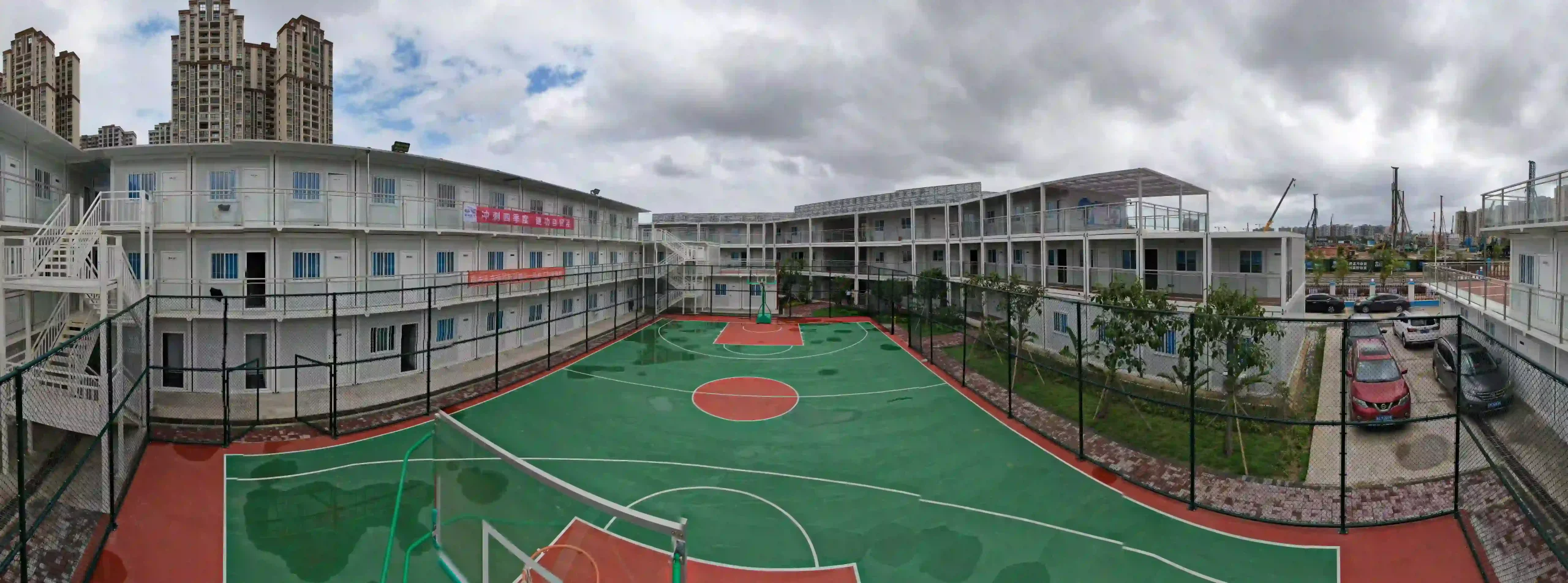
Each GS Housing modular unit is pre-engineered, pre-finished, and shipped flat-packed for quick setup. So, hundreds of living units, classrooms, or clinics can go up in just days. Not months. For instance, during the 2020 COVID-19 outbreak, GS Housing built 66 emergency medical camps across China. These housed over 120,000 people at the same time. The same tech powered a 10,000-person accommodation camp for Saudi Arabia’s NEOM project. That was 4,480 container houses set up and running in weeks.
Strength and Safety During Natural Disasters
Speed does not mean cutting corners. Each GS modular house goes through national-level strength tests. It meets 8-degree seismic and 12-grade wind resistance standards. The steel frame fights rust and fire. Insulation panels use non-combustible materials. They keep insides safe and cozy in harsh weather. Whether in desert heat or coastal dampness, these units stay secure, weatherproof, and last more than 20 years.
How Modular Design Supports Long-Term Disaster Recovery
Once the crisis ends, communities need to rebuild. They must do it in a lasting and cheap way. GS Housing modular systems are not just quick fixes. They serve as bases for the future.
Reusable and Sustainable Construction
The steel frames are made for reuse. Each unit can come apart, move, and get put back together somewhere else. This reduces waste and boosts value. The design cuts building trash by 70%. It lowers energy use by almost half. The method needs 60% less water and concrete than old ways. This fits global goals to cut carbon. This demonstrates GS Housing’s commitment to sustainable building practices.
Transition from Temporary Camps to Permanent Communities
What starts as an emergency shelter can turn into a lasting home or public spot. The same units can grow bigger. They stack up to three stories. You can change them into larger living or working areas. This flexibility means short-term housing can become real neighborhoods. These include schools, clinics, offices, and fun spots. It gives steady life and respect to families who lost their homes.
How Modular Construction Enhances Emergency Education
In recovery after a crisis, education often gets ignored. But fixing classrooms is key to bringing back normal life for kids. GS Housing’s modular schools can arrive, get installed, and open fast.
Rapid Setup of Temporary Schools
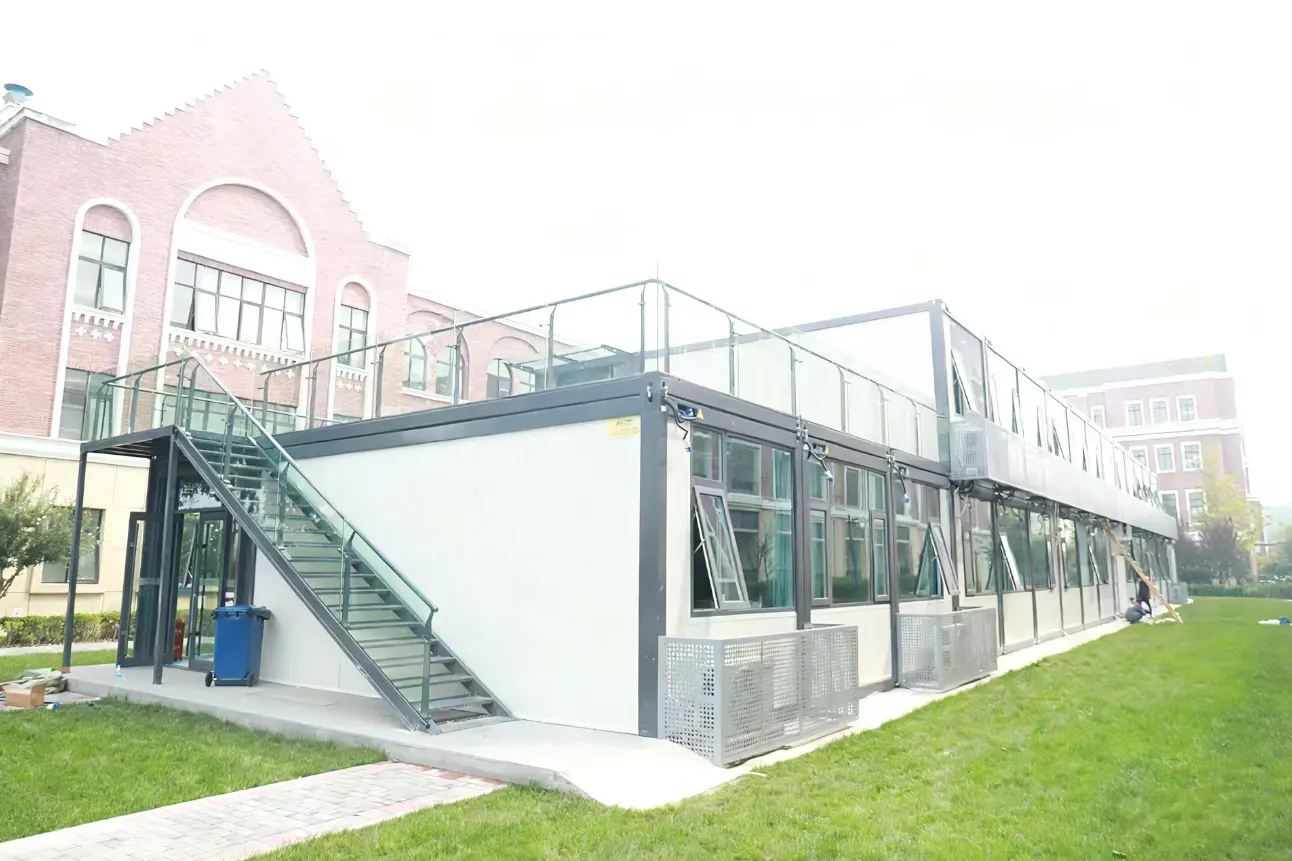
From kindergartens in China’s cities to refugee learning centers abroad, GS Housing’s prefabricated classrooms are built for quick setup and little hassle. Each classroom module comes fully done. It has floors, lighting, and electrical systems. So, schools can reopen in days after delivery. During school breaks, these buildings can even go up while students are gone. Kids return to a fresh campus.
Safe and Comfortable Learning Environments
Built to the same rules as permanent spots, GS modular classrooms have bright insides, strong heat insulation, and energy-saving systems. They can run on solar panels. You can add air conditioning. They work for everyone. The outcome? Spaces that are not just fast to build but nice to learn in. They are safe, healthy, and fit any weather.
What Makes GS Housing Modular Houses Ideal for Relief and Education Projects
The success of modular projects relies on two things: production power and custom options. GS Housing does well in both.
Factory-Standardized Quality and Mass Production Capacity
Across its six manufacturing bases — in Foshan, Changzhou, Chengdu, Tianjin, and Shenyang — GS Housing runs more than 500,000 square meters of production space. Each site uses modern machines. This includes CNC flame cutting and plasma welding. It also has graphite coating systems. These keep surfaces bright and free from rust for 30 years. Every module goes through strict TPM lean management. This ensures no defects, no waste, and no delays. This factory precision lets GS produce up to 200,000 modular units each year. They are ready to go anywhere in the world.
Flexible Design and Custom Function Integration
Each unit can serve as an office, dormitory, clinic, or classroom. Modular stacking allows setups up to three stories. Design extras like balconies, terraces, or solar roofs fit different needs.
Real-World Applications of GS Housing Modular Systems
GS Housing’s skills cover many fields. It makes them a trusted partner for governments, NGOs, and private groups worldwide.
Disaster Relief Projects
From the 2018 Wenchuan earthquake to post-flood fixes and global aid missions, GS Housing’s flat-pack containers have sheltered thousands of families. Their easy transport and fast setup make them great for emergency moves. You can airlift units by helicopter. Or ship them via container vessels to far islands or war zones.
Emergency Education and Refugee Programs
For education and refugee programs run by world groups, GS Housing provides full campuses. These have classrooms, dormitories, and admin buildings. They meet UNHCR and UNICEF standards. These modular schools last long. They offer energy-saving, safe, and growing setups that can shift from short-term use to lasting community spots.
Future Outlook – Modular Innovation for Resilient Communities
Looking forward, GS Housing keeps pushing modular tech into a smarter, greener time.
Integrating Smart and Green Technologies
The company’s R&D teams are making “intelligent cabins.” These are mobile, self-reliant units with solar panels, smart climate control, and built-in recycling systems. These new ideas turn each structure into a small ecosystem. They cut energy use and boost comfort. As world cities set tougher green goals, such systems can form the core of strong housing, schools, and health networks. They are flexible, movable, and low on carbon.
Ready to Build a Resilient Future?
Here at GS Housing, we think new ways in building can turn the world safer. And more lasting for everyone. Maybe you face a bad storm. Or plan a big community setup. Perhaps you want bendable, top-notch homes. Our modular systems fit your wants. They achieve this with exceptional speed and quality.
Reach out today. Find out how GS Housing can aid in building stronger, quicker, and wiser. As a team, we can shape a time where getting back up means not just surviving. It means doing great.
FAQs
Q1: How quickly can GS Housing modular units be deployed after a disaster?
A: It depends on how ready the spot is and how stuff moves. But full shelters or classrooms can start working in 48 to 72 hours once they arrive.
Q2: Are GS Housing modular buildings suitable for long-term use?
A: Sure. Each one gets made to last over 20 years. You can improve them or move them as areas grow.
Q3: Can the modular systems be customized for specific local needs?
A: Yes, for sure. GS Housing gives designs that fit different weather, uses, and local ways. Think camps in Saudi Arabia deserts. Or schools up in Sichuan mountains.



