

 Arabic
  English
  French
  German
  Italian
  Portuguese
  Russian
  Spanish
  Turkish
أخبار الصناعة
حلول مخيم حاويات الإسكان في GS: نشر البنية التحتية للموقع البعيد في أسابيع وليس أشهر
Custom Container Houses: Design, Size, and Functional Options
Custom Container Houses: Design, Size, and Functional Options
2026-01-29 09:20:20
What “Custom” Actually Means on Real Projects
Those decisions usually come from practical constraints rather than preferences.
Climate.
Workforce size.
Shift patterns.
Logistics access.
How people will actually move, rest, and work on site.
Once the units arrive, the job is not to redesign anything. It is to install, connect, and keep operations running without interruption. Projects that misunderstand this tend to learn the hard way.
This is why experienced buyers treat customization as a factory-stage process, not an on-site adjustment.
Size is rarely just about area.
On large overseas camps, layout choices quietly affect daily operations:
How long workers walk between dormitories and sanitation blocks
Where noise becomes a problem during night shifts
Whether emergency routes stay usable during peak hours
On drawings, a dormitory, an office, and a medical unit may look similar. Once the camp is operating, they behave very differently.
This is usually why project teams review typical large-site container house layouts . Not to copy them—but to understand what works and what causes friction later.
Common layout adjustments include:
Separating accommodation zones by workforce type
Linking dorms, toilets, and canteens with covered walkways
Grouping offices away from high-traffic living areas
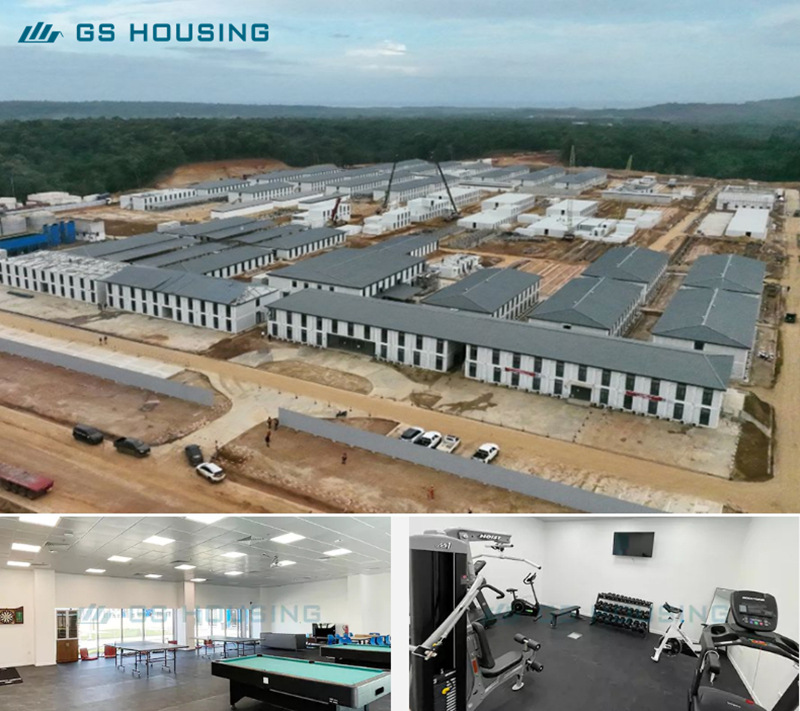
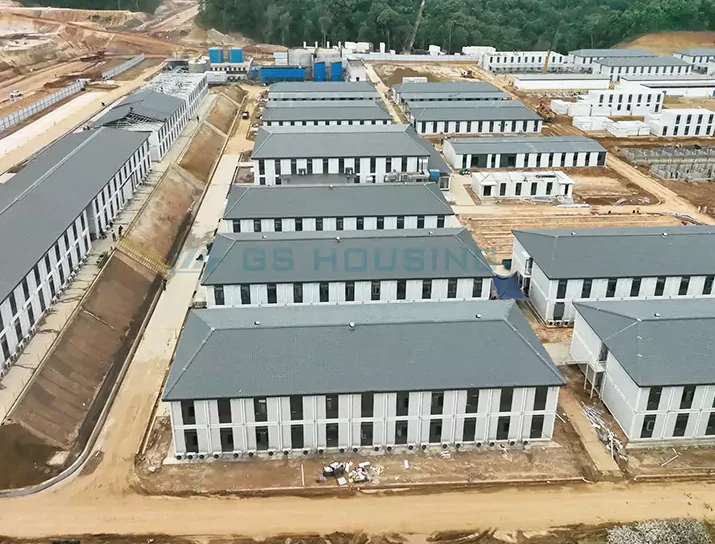
In the Indonesia Huayou mining camp, more than 1,600 container housing units were organized into clearly defined living, working, and support zones. The goal was not visual order—it was operational clarity. The camp functions more like a small town than a temporary site, which is exactly why it remains manageable at scale.
Exterior Materials for Custom Container Houses in Different Environments
Exterior finishes are usually decided by climate, not taste.
Standard color steel panels work for many projects, but others require more durable solutions:
Metal engraved panels where long-term appearance matters
Reinforced roof systems for heavy rainfall or strong winds
Corrosion-resistant treatments in coastal or high-humidity regions
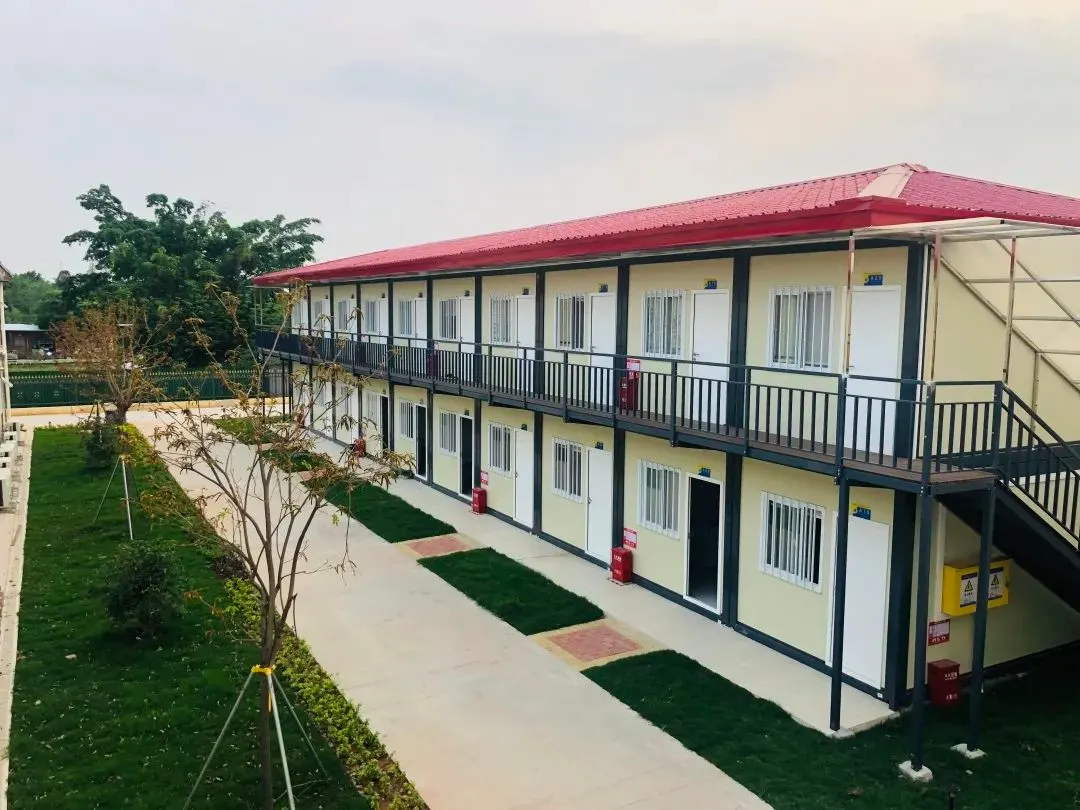
In tropical areas, roof design often changes first. Four-slope roofs are common—not because they look better, but because water needs somewhere to go, quickly. Surface protection follows the same logic. It helps to think of coatings less as “paint” and more as protection—something that keeps moisture out year after year, not just at handover.
All of this is settled in the factory. On-site improvisation rarely ends well.
Interior Configuration Options for Custom Container Houses
Inside a container house, reliability matters more than decoration.
Depending on project requirements, interior wall finishes may include:
Standard color steel panels
Carbon crystal decoration panels
Bamboo and wood fiber boards
Gypsum board systems
Flooring and ceilings are also decided early:
PVC carpet (standard) or wood flooring
V-170 hidden-fastener ceilings or V-290 nail-free systems
Rock wool or glass wool insulation layers
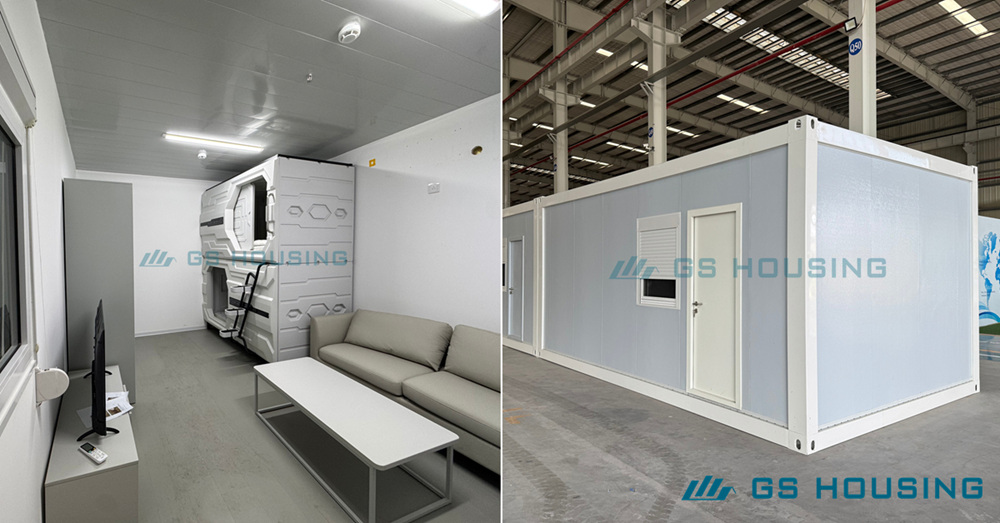
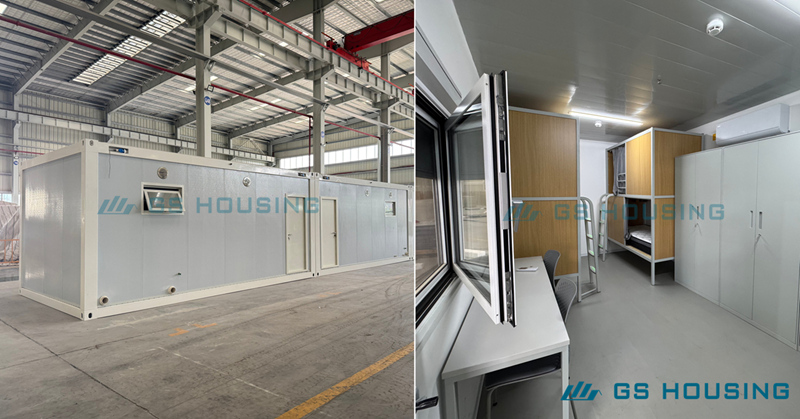
Lighting layouts, sockets, plumbing, and sanitary systems are pre-installed before shipment. Once on site, these systems are expected to work—not to be adjusted. This is why buyers tend to favor المصانع that complete customization before production , rather than suppliers who promise flexibility after delivery.
Climate and Structural Customization Is Not Optional
Hot and humid regions focus on:
Airflow and ventilation paths
Moisture-resistant insulation
Drainage and sealing details
Cold or high-altitude projects prioritize:
Insulation thickness
Thermal bridge control
Stable indoor temperature retention
Seismic regions introduce another layer entirely, requiring reinforced steel structures combined with lighter components to manage movement without excessive stress.
In the Huayou project, structural systems were adjusted to local geological conditions using high-strength, lightweight steel components. The goal was not overengineering—it was long-term stability without complicating transport or installation.
This kind of customization determines whether a camp ages gracefully or becomes a maintenance burden.
How Project-Based Customization Usually Works
In practice, the process is fairly standard across serious manufacturers:
1.Project information review
Location, climate data, workforce size, functional needs
2.Layout and specification proposal
Unit types, quantities, materials
3.Technical drawings and confirmation
Structure, electrical, plumbing, insulation
4.Factory production and quality control
Controlled manufacturing, repeatable output
5.Delivery and installation
At this point, experienced teams stop comparing catalog models. What matters is whether the factory can still adjust structure, layout, and systems before production is locked. That window is where most real customization happens.
Choosing a Factory That Can Actually Customize
Not every container house factory is built for project-level customization.
Real customization depends on engineering depth. Design teams need to coordinate structure, layout, and systems digitally before steel is cut. Tools such as BIM-based coordination and structural calculation software allow load checks, layout validation, and system alignment to happen early—when changes are still inexpensive.
This is what separates factories that adapt products to projects from those that ask projects to adapt to products.
When evaluating a factory, buyers usually look past marketing and focus on:
Engineering and design capability
The ability to coordinate structure, layout, insulation, and utilities digitally before steel fabrication begins.
Experience with similar project environments
Proven track records in overseas camps, extreme climates, or large-scale worker accommodation projects.
Production integration and schedule control
In-house steel fabrication, modular assembly, and quality control under one production system.
Logistics and installation support
Understanding how units are packed, shipped, and installed under real site constraints.
Warranty and after-sales service
Clear responsibility after delivery, especially for long-term or phased projects.
Factories that combine these elements tend to be easier partners when conditions change—which they usually do.
Factories that consistently meet these criteria usually share a few traits:
in-house design teams rather than outsourced drawings, long-term experience with overseas camps, and production systems that can scale without losing control over quality or delivery timelines.
GS الإسكان is one example of this type of manufacturer. With over two decades of project experience, a dedicated engineering and design team, and integrated production covering steel structure fabrication, modular assembly, and on-site installation support, project-based customization remains practical even under tight schedules.
Questions Buyers Usually Ask Before Finalizing Custom Units
Can customization be adjusted after production starts?
Minor items may be flexible early on, but structural layouts, insulation systems, and embedded utilities are generally fixed once fabrication begins. This is why early technical confirmation matters more than late-stage flexibility.
What certifications support overseas customization?
Most custom container houses are produced to ISO and CE standards. For overseas projects, additional documentation—structural calculations, fire performance data, or regional compliance reports—is usually confirmed during the drawing stage rather than after delivery.
Customization Happens Before Installation Ever Begins
Custom container houses are not defined on site.
They are defined in the factory.
For labor camps, industrial parks, mining operations, and government or emergency projects, customization means aligning structure, layout, insulation, and utilities with real conditions before installation starts.
The projects that run smoothly are rarely the ones with the most features.
They are the ones where fewer decisions are left until the last moment.
المحتوى المرتبط
-
-
 أخبار الصناعةلماذا تحول مباني المخيمات الموحدة مواقع العمل البعيدة
 -
 أخبار الصناعةأعلى شركات منزل الصلب ثورة في بناء المنازل الحديثة



