

 Spanish
  English
  Arabic
  French
  German
  Italian
  Portuguese
  Russian
  Turkish
7-Day Industrial Canteen Construction Using Flat Pack Container Houses: A Modular Deployment Guide
7-Day Industrial Canteen Construction Using Flat Pack Container Houses: A Modular Deployment Guide
At major building sites, mining operations, oil & gas project sites, and public works tasks, providing meals to scores of staff each day stands as a necessity rather than a choice. An industrial canteen requires quick setup, secure operation, and straightforward oversight. Conventional masonry structures typically demand several months. In isolated locations, such extended periods prove impractical.
GS Vivienda, a global supplier of modular building solutions, has been providing flat pack container houses and integrated camp systems for large-scale industrial projects worldwide. With strong factory production capacity, standardized structural systems, and experience in overseas camp deployment, GS Housing supports clients in setting up dormitories, offices, sanitation blocks, and industrial canteens within tight project schedules. This situation highlights the role of flat pack container houses. Through factory-prefabricated sections, uniform joints, and repeatable designs, a complete operational industrial canteen can emerge in merely seven days. For site managers facing strict deadlines, this speed holds significant value.
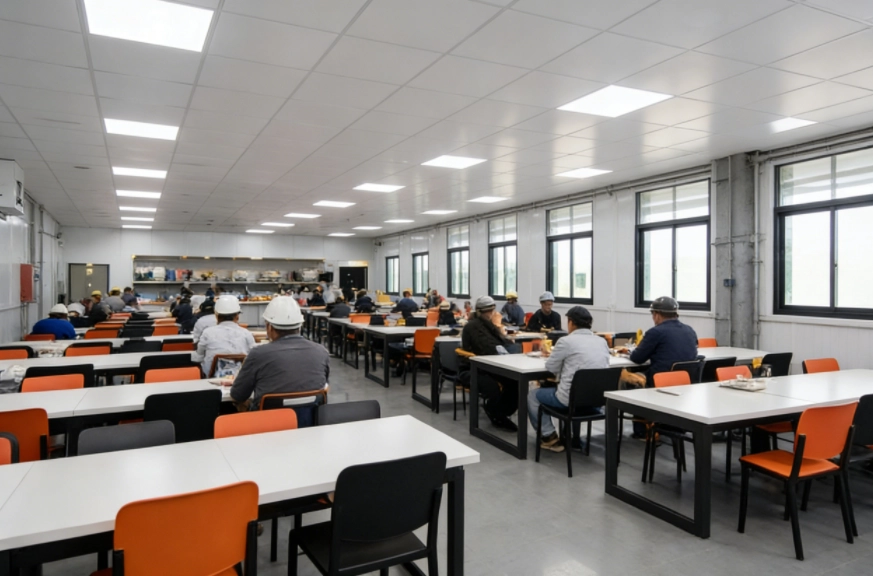
Why Use Flat Pack Container Houses for Industrial Canteens?
Businesses in industry face demands to activate operations swiftly. Lodging, administrative spaces, hygiene facilities, and meal areas often must prepare simultaneously. Constructing a canteen apart via standard techniques hampers the overall base establishment.
Flat pack container houses present an alternative route. They suit rapid rollout, simple shipment, and basic field assembly, rendering them a sensible option for short-term or interim site setups.
Modular Construction Benefits
Prior to examining the canteen directly, grasping the wider modular idea proves useful. Flat pack container edifices form in managed plant settings. Framework skeletons, wall panels, thermal layers, entryways, openings, and cable routes prepare ahead of transport.
This plant-driven process yields superior size precision and steady standards. Climate interruptions lessen, supply discards drop, and the field crew primarily handles integration instead of intensive building tasks. For industry buyers, this results in briefer completion phases and reduced unexpected issues on location.
Industrial Canteens as Part of Modular Construction Camps
In large-scale construction camps, modular canteens are typically deployed together with dormitories, site offices, and sanitation units, forming a complete workforce accommodation system.
Flat pack container canteens are often deployed together with dormitories, offices, and sanitation units in modular construction camps.
Asamblea rápida en el sitio
Duration often serves as the primary motivator. With flat pack container houses, build elements reach pre-planned and fit for linking. Fastened joints substitute many wet process activities. Apart from simple bases, no broad concrete hardening proves necessary.
A skilled group can join several sections daily. Roof coverings, barrier sections, and inner surfaces proceed in a defined order. For an average-sized industrial canteen, the entire framework frequently finishes inside one week, provided the location prepares beforehand.
Cost Efficiency Advantages
Industry buyers scrutinize expense per square meter and overall cycle outlay closely. Flat pack container canteens cut costs through various means.
Shipment expenses stay in check since the pieces arrive in compacted form, permitting greater load per vehicle or shipment box. Field labor needs decrease. Build discards remain slight. Upon task conclusion, the edifice can disassemble and transfer, thus extending the starting capital across diverse locations. In the long run, this adaptability generates tangible economies.
What Are The Key Components Needed for a 7-Day Build?
A seven-day plan arises not from chance but from sound preparation and appropriate build framework. Multiple essential elements must prepare prior to fitting commencement.
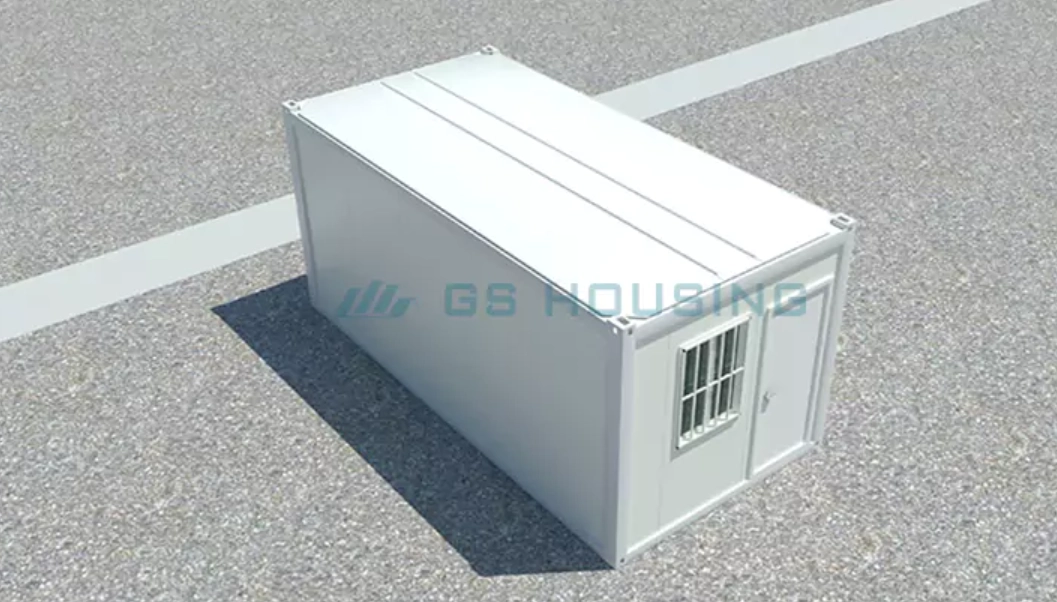
Flat Pack Container House Units
The core support of the canteen consists of the flat pack container house unit. These units encompass steel skeletons, base systems, barrier sections with insulation, roof sections, and linkage hardware.
Superior steel skeletons featuring rust-protection coatings hold vital importance, particularly in seaside or moist environments. Thermal composite barriers aid in preserving internal ease and curbing power consumption. Uniform sizes enable swift positioning and piling as needed.
Prefabricated Kitchen And Dining Modules
An industrial canteen extends beyond a bare enclosure. It incorporates a business kitchen, distribution zone, supply chamber, cleaning area, and meal space. Certain ventures employ distinct sections for heated kitchens, chilled storage, and utensil cleaning to satisfy cleanliness norms.
Pre-made kitchen sections can include pre-set air flow gaps, oil conduit routes, and waste channels. This approach minimizes field alterations and accelerates concluding activation. Meal sections emphasize expansive areas, illumination, and air circulation more heavily.
Utilities And Infrastructure Packages
Energy provision, water delivery, waste removal, and air handling require incorporation from the outset. Flat pack container frameworks typically plan with allocated paths for wires and conduits.
For distant locations, service bundles might encompass water reservoirs, waste processing units, and reserve power sources. Early arrangement of these setups prevents revisions and renders the seven-day goal attainable.
How Do You Plan The Layout Efficiently?
Despite quick modular frameworks, flawed layout arrangement can generate delays. Staff movement, meal ready areas, and cleanliness division all demand thoughtful consideration.
Space Optimization Strategies
The meal zone ought to handle high-demand periods without congestion. Seating setups, passage breadths, and crisis departures must adhere to area security guidelines. Modular building permit adaptable inner divisions, allowing supply chambers and administrative spots to integrate as required.
Piling or aligning sections laterally produces broader reaches. Expansive meal enclosures prove typical, with supports placed to evade obstructing paths.
Workflow For Kitchen And Dining Zones
Within a soundly planned industrial canteen, meal progression advances unidirectionally. Unprocessed items access via a specific area, advance through readying and heating, then arrive at the distribution point. Utilized items proceed distinctly to cleaning zones.
Modular designs facilitate clearer division between pure and soiled areas. This distinction bears importance for cleanliness adherence and routine task productivity.
Compliance With Safety And Hygiene Standards
Industry kitchens must fulfill fire protection, air flow, and sanitation criteria. Suitable thermal barriers, flame-proof substances, and automated extraction setups remain indispensable.
Modular container edifices can form to align with regional build rules and wellness mandates. Flame-rated sections, grip-resistant bases, and cleanable barrier surfaces frequently specify for canteen initiatives.
How Does The Assembly Process Work?
With planning and elements set, implementation shifts to the forefront. A defined progression maintains the venture on time.
Site Preparation Steps
Ahead of section arrival, the location should level and firm up. Basic linear bases or concrete slabs often suffice. Service linkages ought to position per the design scheme.
Precise gauging here averts later positioning problems. Even modular edifices demand a firm foundation.
Module Installation Workflow
Installation generally begins by setting the lower skeleton and base system. Barrier sections secure thereafter, trailed by roof supports and roof sections. Upon main framework completion, inner divisions, entryways, and openings install.
Device and electrical setups link post-framework joining. Since wiring routes pre-plan largely, concluding linkage proceeds fairly rapidly.
Final Fittings And Quality Checks
The concluding phase covers kitchen device placement, light fittings, pipe linkages, and inner surface details. A thorough review verifies framework firmness, electrical security, water sealing, and air handling output.
Merely following system trials does the canteen commence operation. Through solid teamwork, this full loop can align within a seven-day frame for average ventures.
How GS Housing Supports Rapid Industrial Canteen Deployment for Large-Scale Projects
Selecting an apt modular provider creates a notable impact. For extensive industry bases, familiarity with bulk output and international dispatch holds key relevance.
High-Quality Modular Materials
GS Housing produces flat pack container houses via steel frameworks and thermal barrier systems. Their offerings suit repeated joining and shifting, fitting extraction and public works tasks.
Rigorous plant oversight aids in upholding steady sizes and framework output, thereby lessening field tweaking efforts.
Custom Design And Flexible Configurations
Each site venture features varying staff sizes and design limits. GS Housing delivers tailored setups, merging several sections to form vast meal enclosures, distinct kitchen areas, or multi-level base facilities.
Adaptable planning implies the canteen can expand alongside venture growth. Such versatility frequently spares later alteration expenses.
After-Sales Support And Warranty
Extended industry ventures necessitate dependable aid. GS Housing furnishes technical advice amid fitting and supplies coverage for framework parts. For international buyers, lucid records and distant aid assist in resolving matters promptly.
Cost and Timeline Comparison: Flat Pack Container Canteens vs Traditional Site-Built Facilities
Site overseers frequently weigh modular container canteens against standard reinforced concrete edifices.
Modular Container Canteen vs Traditional Concrete Canteen: Cost and Timeline Comparison
Standard building entails digging, complete base labor, stonework, coating, and drawn-out hardening times. Climate holdups occur often. Labor requirements stand high.
Flat pack container edifices diminish wet labors and condense schedules. Although supply expense per piece might seem similar, the overall fitted cost and duration gains generally support modular choices, particularly in remote spots.
Budget Breakdown For A 7-Day Project
In a standard seven-day modular canteen venture, primary expense categories cover container pieces, shipment, base readying, joining labor, kitchen devices, and service frameworks.
As most framework tasks conclude in plants, field labor and device hire fall below standard builds. For short-term or shiftable ventures, the resale or repurpose worth additionally enhances fiscal yields.
Return On Investment For Industrial Clients
Quicker rollout signifies staff receive site meals sooner, thereby cutting external catering outlays and travel durations. Enhanced base amenities can further bolster staff spirit and continuity.
When an edifice disassembles and repurposes readily, the investment yield extends over numerous ventures. Across several years, this versatility emerges as a robust fiscal merit.
For EPC contractors managing multi-phase infrastructure projects, modular canteen systems reduce repetitive construction cost and allow asset reuse across different sites.
Evaluating a Modular Canteen System for Your Construction Camp? Key Technical Factors to Review
Before ordering, site overseers should evaluate staff scale, venture length, regional weather, and rule demands. Location entry for vehicles and lifting gear must verify. Service provision ought to assess early.
Flat pack container houses transcend mere interim covers. Through fitting planning and substance picks, they can function as sturdy, secure, and cozy meal venues for industry groups. For firms overseeing vast building or extraction tasks, a seven-day modular canteen stands not as an impossible goal but as the outcome of effective arrangement, plant exactness, and proficient field performance.
Preguntas frecuentes
Q1: How many workers can a modular container canteen serve?
A: Capacity depends on the number of modules combined. By adding units side by side, dining space can be expanded to accommodate hundreds of workers per shift.
Q2: Can flat pack container canteens meet local fire and hygiene regulations?
A: Yes, when designed with fire-rated panels, proper ventilation, and compliant kitchen layouts, modular canteens can meet local building and health standards.
Q3: Is it possible to relocate the canteen after the project ends?
A: Yes. One of the main benefits of flat pack container houses is that they can be dismantled, transported, and reassembled at a new site, making them suitable for rotating industrial projects.



