

 Spanish
  English
  Arabic
  French
  German
  Italian
  Portuguese
  Russian
  Turkish
Noticias de la industria
GS Housing Modular Classrooms: The Smart, Scalable Solution for Modern Schools
Container House Factory: How Modular Housing Is Manufactured for Harsh Environments
Container House Factory: How Modular Housing Is Manufactured for Harsh Environments
2026-01-20 10:44:02
Introduction: What Is a Container House Factory, Really?
That means every wall, every beam, every cable route is defined before the first piece of steel is cut.
No weather delays.
No on-site improvisation.
No last-minute decisions.
This factory-first approach is exactly why modular systems are widely used for prefabricated site accommodation, worker camps, and remote industrial projects. It reduces uncertainty. And in engineering, uncertainty is cost.
Companies like GS Vivienda design their entire workflow around this logic. Not because it sounds good in brochures, but because controlled environments produce controlled results.
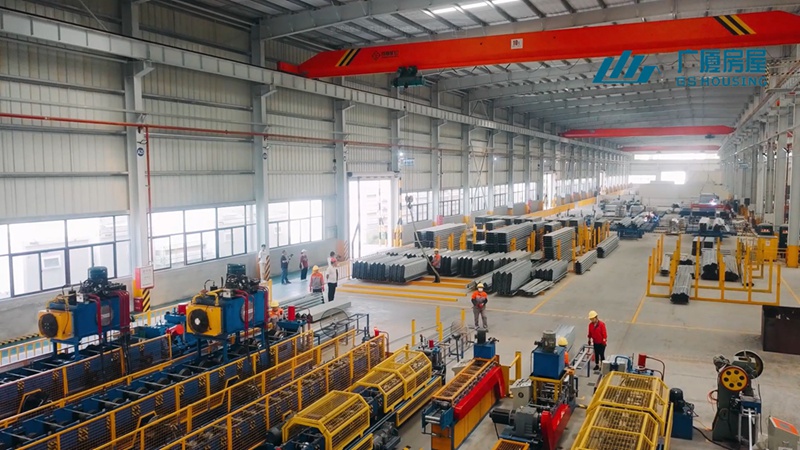
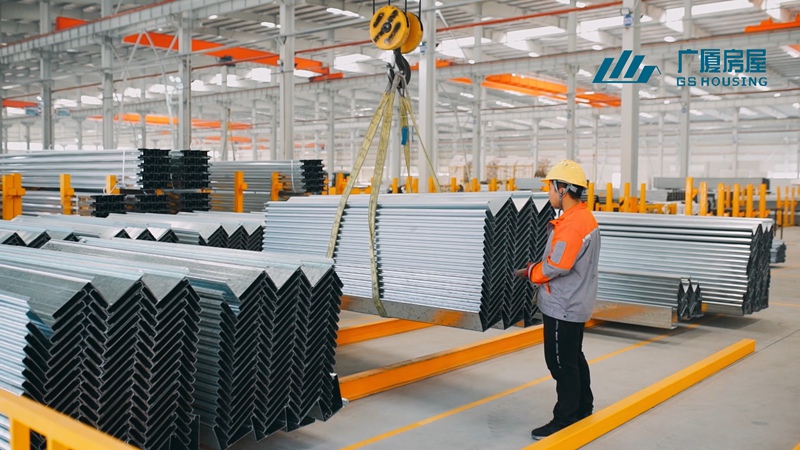
Raw Materials and Steel Structure Fabrication
Everything starts with the frame.
Not decoration.
Not interior.
Steel.
- CNC cutting
- Precision bending
- Jig-positioned welding
- Full anti-corrosion treatment
This is not manual guesswork.
Frames are fixed in position before welding starts. That means alignment is locked, not adjusted later.
It’s like using a mold instead of freehand drawing.
If the mold is right, every piece is right.
After welding, the structure goes through:
Weld seam inspection
Grinding and smoothing
Hot-dip galvanizing or zinc coating checks
This matters, especially for coastal projects, desert sites, and high-humidity regions, where corrosion does not wait.
A weak frame will not fail immediately.
It fails slowly.
And slowly is expensive.
This is why reliable modular container house manufacturing always puts structural accuracy first.
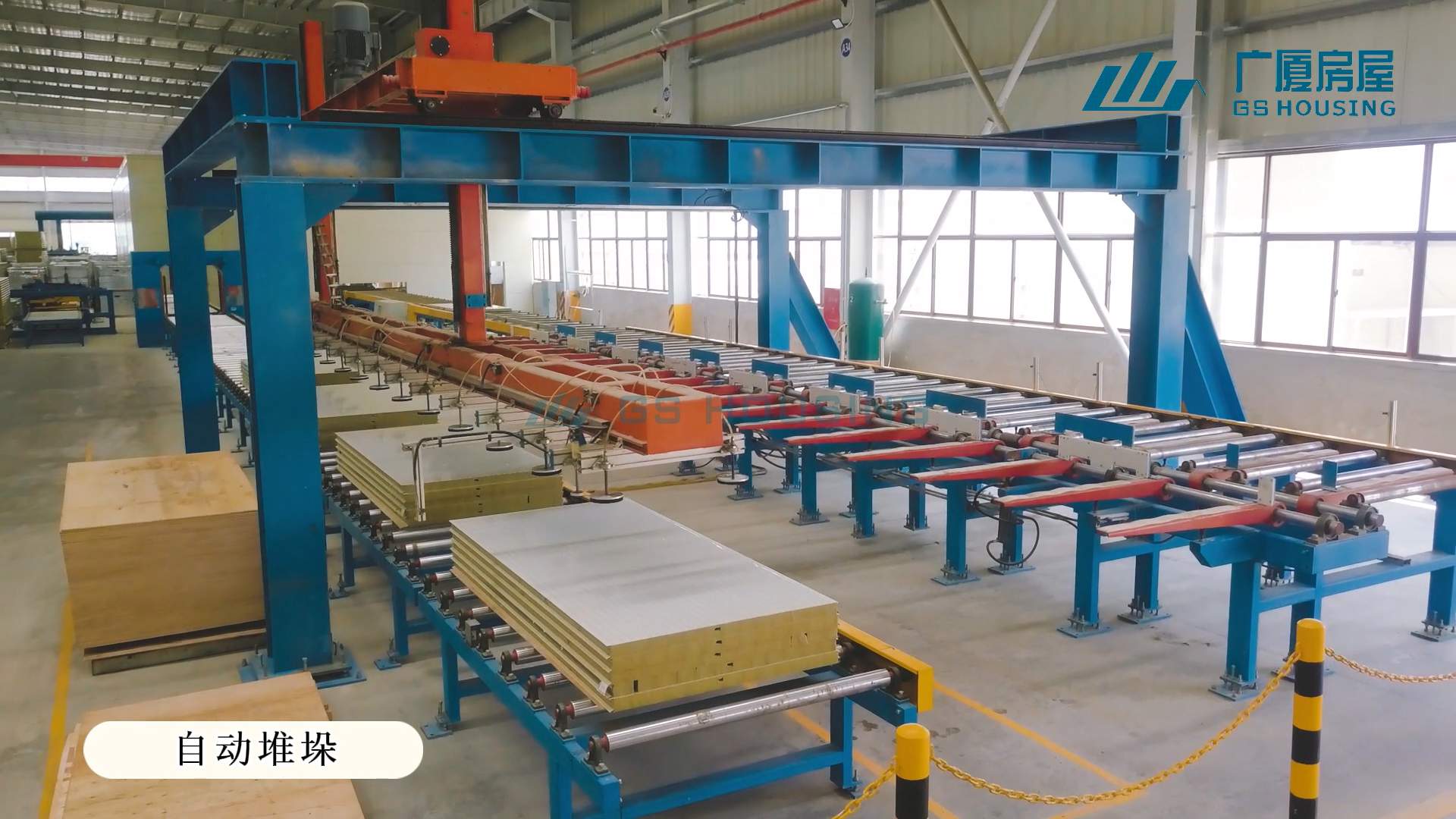
Wall Panels, Insulation, and Roofing Systems
Once the skeleton is complete, the building needs skin.
In a professional prefabricated container house factory, wall panels are not cut on site. They are produced as finished components.
Typical process:
1、Outer steel sheet roll-formed
2、Insulation layer inserted (rock wool or PU)
3、Inner skin bonded
4、Edges sealed under pressure
This creates a rigid sandwich panel.
Not stylish.
Just effective.
Rock wool is often used in factory-built worker accommodation because it resists fire and doesn’t absorb moisture.
PU is chosen when thermal performance is critical.
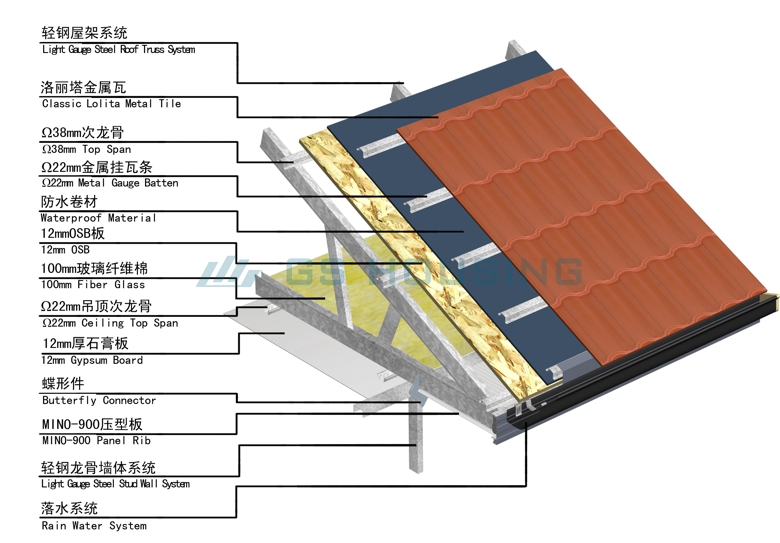
Roof systems follow the same logic.
Better factories do not simply place sheets on top. They design:
- Integrated drainage channels
- Sloped water flow paths
- Multi-layer waterproof systems
Water is lazy.
If you don’t guide it, it stays.
If it stays, it leaks.
That’s why in many prefabricated modular housing solutions, the roof is treated as a system, not a cover.
Electrical & Plumbing Pre-installation in Factory
This is where factory production really shows its strength.
On-site wiring is messy.
On-site plumbing is risky.
Inside a controlled container house production process, electrical and plumbing systems are installed before walls are closed.
Workflow usually looks like this:
- Cable trays fixed into frames
- Wires pulled, labeled, and tested
- Sockets and switches mounted
- Water pipes installed and pressure-tested
- Drainage pipes connected and sealed
All before panels are closed.
Think of it like building a car dashboard before closing the body.
You see everything.
You reach everything.
You fix everything.
For remote mining site modular camps or infrastructure worker housing, this reduces on-site chaos dramatically.
Less rework.
Fewer mistakes.
Faster installation.
Quality Control and Factory Testing
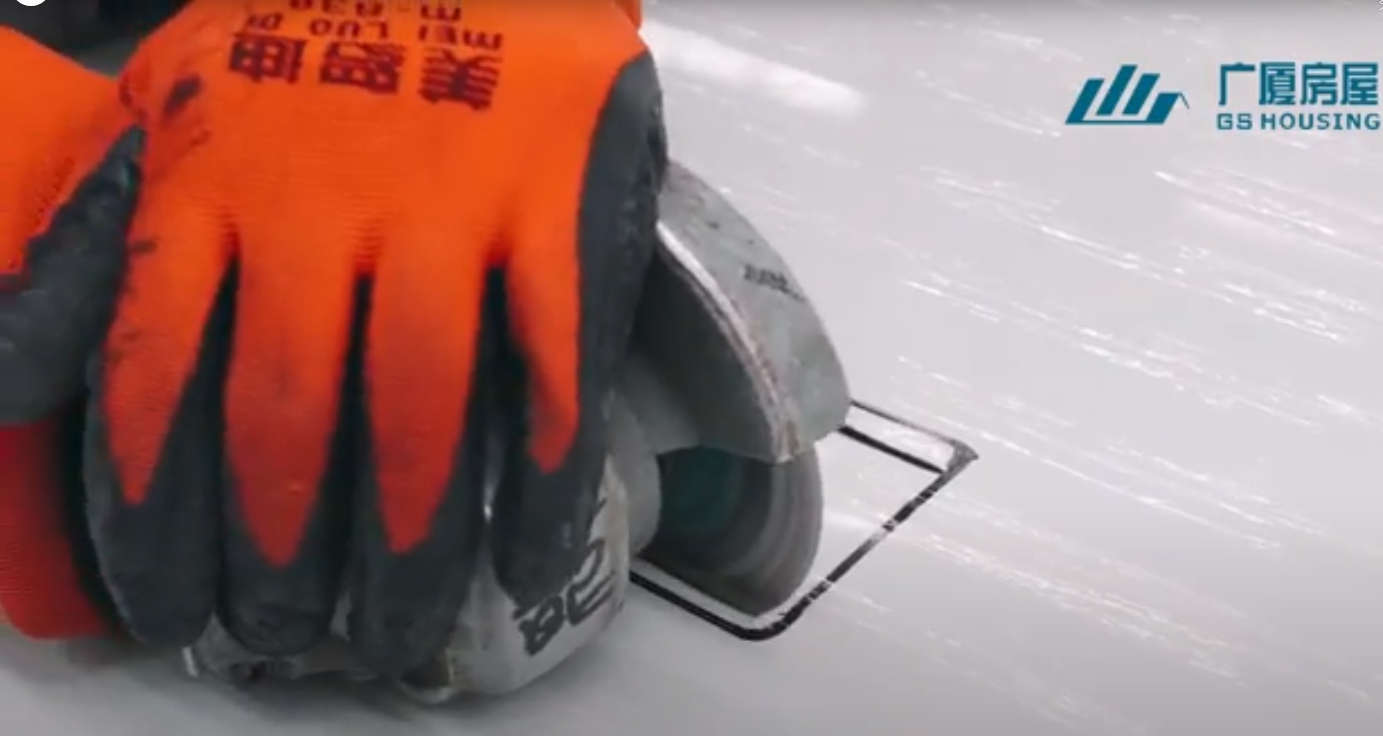
Quality control is not one step.
It is many small steps.
In a real container house factory, inspections happen:
- After frame welding
- After panel installation
- After wiring
- After plumbing
- After full assembly
Each stage has its own checklist.
Not memory.
Not experience.
Checklists.
Because people forget.
Processes don’t.
Typical checks include:
- Structural alignment
- Weld seam integrity
- Coating thickness
- Electrical continuity
- Water pressure stability
- Door and window sealing
This is not exciting work.
But it is the difference between a unit that lasts 5 years and one that lasts 15.
This discipline is one of the reasons established suppliers like GS Housing’s container camp systems are frequently used in large-scale worker accommodation projects.
Packing and Transportation Methods
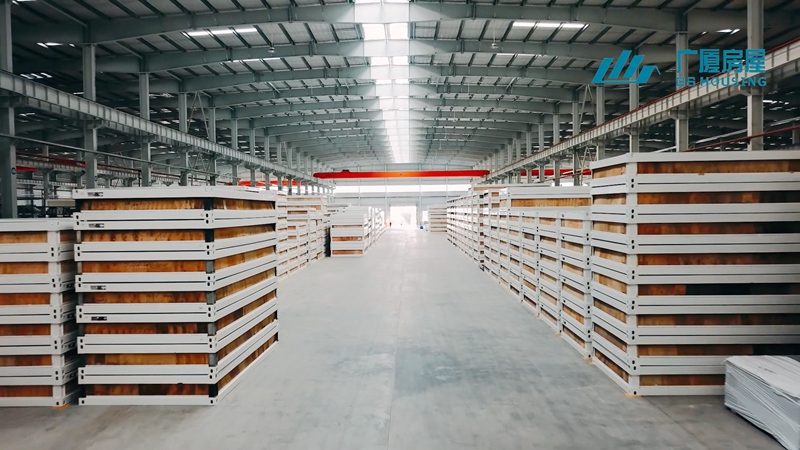
After inspection, the unit is prepared for transport.
This is not just plastic wrap.
Professional packing includes:
- Corner protection
- Film wrapping
- Steel frames for stacking (if needed)
- Clear lifting point marking
Why so careful?
Because transport is rough.
Ships move.
Trucks shake.
Cranes are not gentle.
A responsible container house manufacturer designs with transport in mind from the beginning.
Some projects require:
Fully assembled modules
Flat-pack systems
Foldable structures
Each has its place.
Flat pack saves space.
Assembled saves time.
Foldable balances both.
For overseas delivery and prefabricated worker camps in extreme climates, logistics planning is part of product design, not an afterthought.
Why Factory Production Ensures Stable Quality
Traditional construction depends on:
- Weather
- Site conditions
- Worker skill
- Material delivery timing
- Factory production depends on:
- Machines
- Procedures
- Training
- Control systems
One is variable.
The other is stable.
In modular container house manufacturing, stability is everything.
Same steel.
Same jigs.
Same process.
Day after day.
It’s the difference between cooking on a campfire and cooking in a kitchen.
Both make food.
Only one makes the same dish every time.
That’s why many project owners choose factory-built container homes for worker accommodation instead of site-built temporary shelters. Not because they look better, but because they behave better.
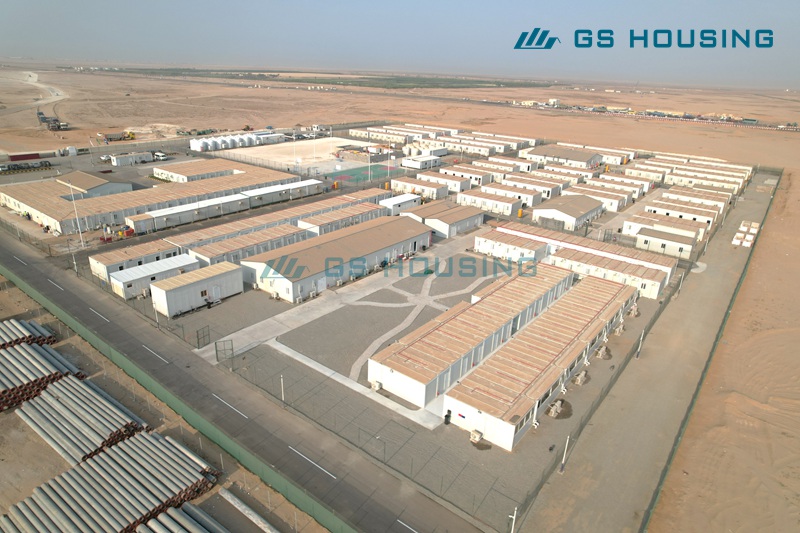
Real Project: Saudi Red Sea Container Camp for 2,500 Workers
A good example is the Saudi Red Sea container camp project for 2,500 workers, supplied as modular units for a large coastal industrial development.
This site faces:
- Extreme heat
- High UV radiation
- Dry desert winds
- Heavy sand and dust
- Significant day–night temperature difference
Designing for this environment is not about comfort.
It’s about survival of materials.
In this project, the factory design had to address:
Strong UV resistance to prevent panel aging and seal degradation
Enhanced thermal insulation to handle hot days and cooler nights
Reinforced sealing systems to block sand intrusion
High-strength galvanized steel structure to resist long-term deformation
Integrated drainage design despite low rainfall, because when desert rain comes, it comes fast
These details were built in at the factory stage, not adjusted on site.
Because in the desert, you don’t get second chances.
This kind of environment is exactly where controlled prefabricated container house factory production proves its value. Not in theory. In reality.
Final Thoughts: It’s Manufacturing, Not Improvisation
A modern container house factory is not a warehouse with welding machines.
It is a production system.
A serious container house manufacturer is not selling boxes.
They are managing risk.
And a well-designed steel structure container house is not strong because it looks strong.
It’s strong because it was engineered, tested, and repeated.
From raw steel to finished unit, every step matters.
Every step is controlled.
Every step is predictable.
That is the quiet strength of factory production.
Not loud.
Not flashy.
Just reliable.
If you are planning modular camps, prefabricated site accommodation, or worker housing in high-risk environments, it is usually worth discussing technical details directly with manufacturers who operate their own factories. Teams like GS Vivienda can often provide practical input on structure, insulation, and logistics long before problems appear on site.
Not to sell.
But to plan properly.
For project owners and contractors planning modular camps, worker accommodation, or container housing in harsh environments, understanding factory capabilities is critical before finalizing a supplier.
Discussing structure design, insulation systems, logistics, and quality control at the early stage often prevents costly adjustments later.
If you want to understand how a container house factory can support your specific project requirements, GS Housing’s technical team can walk you through manufacturing options, delivery methods, and project planning considerations.
Anterior:Sustainable Housing Solutions: How Expandable Container Houses Support Large-Scale Projects
Siguiente:Modular Camp Buildings for Construction, Disaster Relief, and Military Use
Contenido relacionado
-
-
 Noticias de la industriaFrom Crisis to Classroom: How GS Housing Modular Solutions Transform Recovery and Education
 -
 Noticias de la industriaGS Housing: Redefining Emergency Response with Rapid-Deployment Container Solutions



