

 Italian
  English
  Arabic
  French
  German
  Portuguese
  Russian
  Spanish
  Turkish
How Long Does a Container House Last Lifespan Explained for Modern Steel Frame Homes
How Long Does a Container House Last Lifespan Explained for Modern Steel Frame Homes
Container houses are no longer seen as short-term shelters or rough site offices. With modern steel frame systems, factory-made components, and better surface treatments, today’s container houses are used as worker camps, schools, clinics, and even permanent housing. A common question often comes up before a purchase decision: how long does a container house actually last?
The answer depends on materials, environment, design, and how the building is cared for over time. Based on real project experience from GS Alloggi, this article breaks down the key factors that affect container house lifespan.
What Factors Determine the Lifespan of a Container House?
Before talking about numbers, it helps to understand what really controls durability. A container house is a system, not just a box.
Quality of Materials and Steel Frame Durability
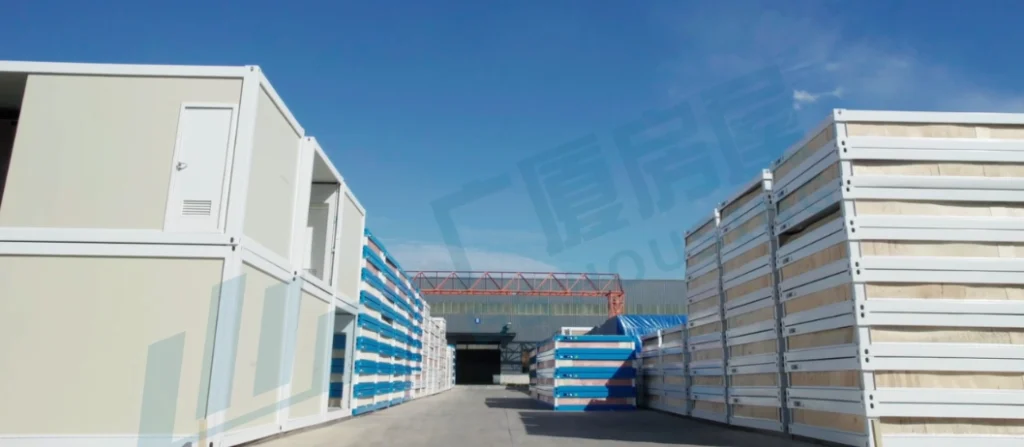
The steel frame is the backbone of any container house. Its thickness, coating, and fabrication quality directly affect service life. GS Housing flat pack container houses use high-strength steel components for columns, top frames, and bottom frames. The coating slows down corrosion and protects the steel even when surface paint gets worn.
Unlike converted shipping containers, these structures are purpose-built for buildings. Load paths, joint details, and welding quality are controlled in factory conditions, not improvised on site. That alone avoids many early failures seen in low-grade units. A strong frame does not mean heavy or wasteful. It means the steel is used in the right places, with verified strength and tested connections.
Environmental and Site Conditions
Where the container house is used matters just as much as how it is built. Coastal areas bring salt air. Desert zones mean strong UV and big temperature swings. Mining sites and industrial plants add dust, vibration, and chemical exposure.
GS Housing projects cover offshore platforms, oil and gas fields, mining camps, and disaster relief areas. In these settings, standard materials are adjusted. Anti-corrosion coatings, fire-rated panels, and sealed joints are selected based on the real site, not a catalog photo.
A container house in mild inland climates will naturally last longer with less effort. In harsh environments, lifespan is still long, but only if the right protections are added early.
Maintenance and Upkeep Practices
No building lasts forever without care. Container houses are no exception. The good news is that maintenance is usually simple and predictable.
Basic tasks like checking seals, touching up paint, cleaning drainage paths, and inspecting bolts go a long way. Because the structure is exposed and modular, problems are easier to spot than in traditional buildings hidden behind thick walls. In long-term GS Housing camps, scheduled inspections are often done once or twice a year. That small effort can add many years to the building’s usable life.
How Long Can Flat Pack Container Houses Last in Real Use?
This is the question most buyers really care about. Marketing claims vary, so it is advisable to consider realistic lifespan ranges.
Expected Service Life Under Normal Conditions
Under normal use and standard maintenance, a well-built flat pack container house typically lasts 20 to 30 years. This aligns with structural testing results and long-term project feedback.
For GS Housing flat pack systems, structural safety is designed to meet high wind resistance and seismic standards. These are not temporary sheds. They are engineered buildings meant for repeated use. Many projects originally planned for “temporary” use end up staying in place far longer because the buildings remain solid and functional.
Extended Life With Protective Treatments
With upgraded coatings and better surface protection, lifespan can go beyond the basic range. GS Housing applies advanced powder coating processes, including graphene-based coatings, on steel components. These coatings resist UV fading, moisture, and chemical exposure much better than standard paint.
In coastal or offshore projects, these treatments are not optional. They are the reason housing units on platforms or near the sea remain in service year after year without major steel repairs. With these measures, a 30+ year service life is achievable in many cases.
Case Examples From GS Housing Projects
GS Housing has delivered container-based camps for oil and gas pipelines, mining operations, disaster relief, and large infrastructure projects across Asia, the Middle East, Africa, and South America.
In mining camps in Mongolia and Chile, case di contenitori a pacchetto piatto have been reused across different project phases, relocated, and reassembled multiple times. Structural performance remained stable even after repeated transport cycles.
Emergency housing built after earthquakes and floods in China was designed for fast deployment, but many of those units stayed in use for years as schools, clinics, and community buildings. These examples show that real-life lifespan often exceeds initial expectations.
Does Design and Construction Affect Longevity?
Materials matter, but design choices decide how well those materials age.
Role of Structural Engineering in Durability
A container house is not just stacked boxes. Load transfer, wind bracing, and joint behavior under stress must be calculated. Poor design leads to movement, leaks, and fatigue over time.
GS Housing uses standardized structural systems tested for stacking, transportation, and long-term loading. Connections are designed to be tight but flexible enough to handle movement during lifting and relocation. This engineering approach reduces stress concentration, one of the main causes of early structural damage.
Benefits of Modern Steel Frame Design
Modern steel frame container houses are lighter and stronger than older designs. They rely on steel profiles optimized for strength-to-weight ratio.
This means less material waste, easier transport, and better performance under seismic or wind loads. The frame works together with wall panels, floors, and roofs as a system, not as separate parts fighting each other. Over time, this balance reduces cracking, joint failure, and alignment problems.
GS Housing’s Design Standards for Lifespan Optimization
GS Housing designs flat pack container houses as repeat-use assets, not one-off builds. Standardized modules allow damaged parts to be replaced without tearing down the whole structure.
Wall panels, doors, windows, and service systems are modular. If one component ages faster, it can be swapped out. This design mindset turns a container house into a long-term building solution with flexible renewal.
Can Maintenance Really Extend a Container House’s Life?
While maintenance may seem mundane, it is crucial for preserving the structure’s longevity.
Routine Inspection and Corrosion Prevention
Regular checks focus on steel joints, bolts, coatings, and drainage areas. Early signs of corrosion are easy to treat if caught in time.
Because GS Housing units use steel and factory coatings, corrosion usually starts slowly. Simple actions like repainting exposed spots can stop damage from spreading.
Weatherproofing and Seal Enhancements
Seals around windows, doors, and panel joints protect insulation and interior finishes. Over time, seals can harden or shrink, especially in hot climates.
Replacing seals is low-cost but high-impact. It prevents water ingress, mold, and internal corrosion that often shortens building life more than structural issues do.
GS Housing Maintenance Guidance for Owners
GS Housing provides clear maintenance guidance with its projects, especially for long-term camps and permanent facilities. These guidelines are practical, not complex manuals.
Owners know what to check, how often, and when professional support is needed. This clarity helps buildings stay in good condition even when operated by non-specialist teams.
What Are the Lifespan Differences Between Flat Pack Container Houses and Traditional Buildings?
Container houses are often compared to concrete or masonry buildings. The comparison is not as one-sided as many think.
Comparative Durability Analysis
Traditional buildings can last decades, even centuries, but only with heavy foundations, long construction time, and high upfront cost. Flat pack container houses are designed for speed, flexibility, and reuse.
In terms of structural lifespan, modern steel container houses are closer to light steel buildings than temporary cabins. When properly designed and maintained, the gap in durability is much smaller than expected.
Cost Efficiency Versus Longevity Tradeoffs
A traditional building may last longer on paper, but it is rarely moved, reused, or adapted easily. Container houses offer strong value over their service life because they can be relocated, expanded, or repurposed. For projects with uncertain timelines or changing needs, this flexibility often matters more than absolute lifespan.
Why Flat Pack Solutions From GS Housing Stand Out
GS Housing flat pack container houses are designed to bridge the gap between temporary and permanent. They meet strict structural standards, offer long service life, and still keep the benefits of modular construction. This balance is why they are widely used in energy, mining, defense, education, and large-scale housing projects worldwide.
Ready to Choose a Durable Container House Solution With GS Housing?
A container house is not just about how long the steel lasts. It is about how well the whole system performs over time. With proper design, materials, and maintenance, modern flat pack container houses can serve reliably for decades.
GS Housing’s experience across harsh environments and large-scale projects shows that container houses are no longer short-term answers. They are practical, durable building solutions built for real-world demands. If you are planning a worker camp, mining camp, or modular housing project, contact GS Housing today for a tailored container house solution!
Domande frequenti
Q1: Are container houses considered permanent buildings?
A: They can be. Many GS Housing container houses are designed as permanent or semi-permanent structures, depending on local codes and project needs.
Q2: Can a container house be relocated without reducing its lifespan?
A: Yes. Flat pack container houses are designed for multiple assembly cycles. Proper handling and reinstallation do not significantly shorten service life.
Q3: What is the biggest factor that shortens container house lifespan?
A: Lack of basic maintenance, especially ignoring early corrosion or seal damage, causes more issues than normal structural aging.



