

 English
  Arabic
  French
  German
  Italian
  Portuguese
  Russian
  Spanish
  Turkish
GS Housing Container Camp Solutions: Deploy Remote Site Infrastructure in Weeks, Not Months
GS Housing Container Camp Solutions: Deploy Remote Site Infrastructure in Weeks, Not Months
Remote projects move on tight schedules. Many sites sit far from towns, in deserts, mountains, forests, or along long pipeline routes. In these environments, traditional construction is far too slow. Workers may arrive before shelter or offices are ready. Weather also changes fast, and materials can be hard to move. Because of this, container-based modular camps have become a much more practical way to build quickly. GS Housing has developed this approach for many years, combining strong steel structures, factory-made parts, and fast on-site assembly. With six large production centers across China and experience delivering thousands of units for major projects such as the Saudi NEOM 10,000-person camp, the company has proven that remote construction can be done in far less time.
What Makes Container Houses Ideal for Remote and Hard-to-Access Camp Locations?
Working in remote land brings many challenges. Roads may be rough, storms may arrive suddenly, and logistics can slow down simple tasks. Before talking about speed, it helps to understand how container units handle these difficult conditions.
Strong Structural Performance and All-Weather Reliability
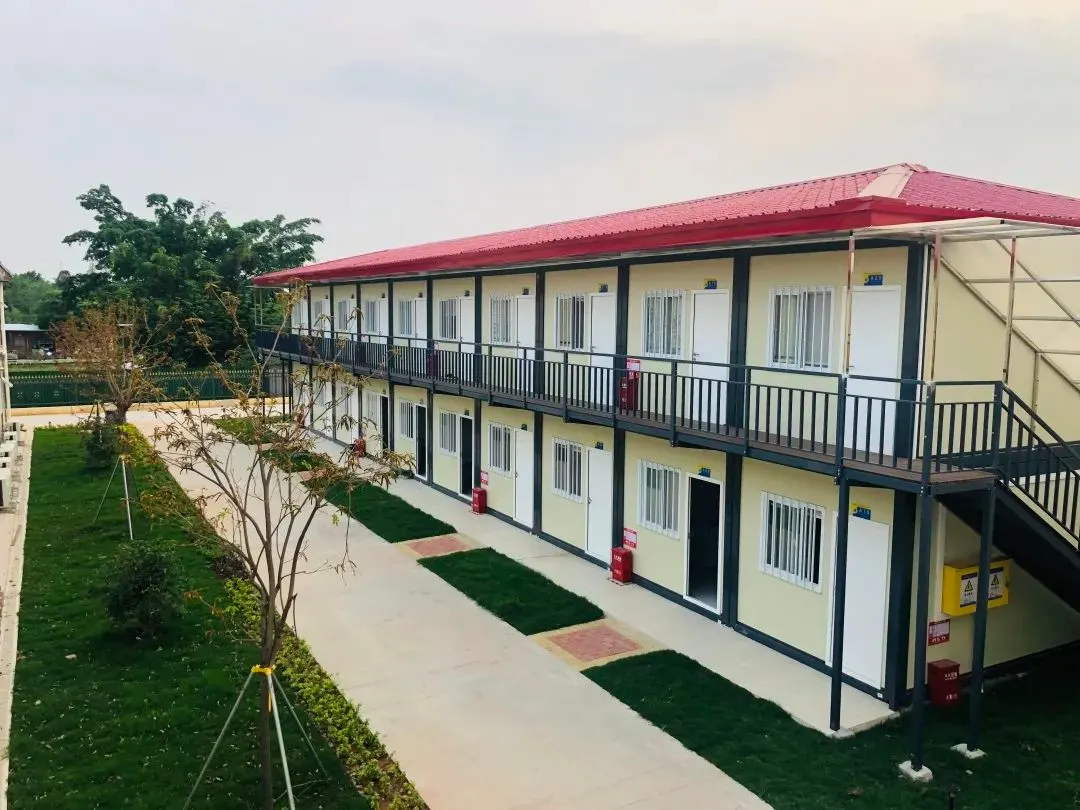
GS Housing’s flat-pack container houses are built to last. The frame uses steel, which stays firm in harsh weather and resists rust. Non-combustible insulation helps protect against heat and fire. These modules are tested to stand through level-12 winds and level-8 earthquakes. Because of this, the units can remain stable in deserts, coastal zones, and areas with strong seasonal storms. Each building is designed for a service life of more than twenty years, which is rare for fast-built camps.
Factory-Finished Modules for Fast On-Site Deployment
Every container is completed inside a factory before it travels to the site. Workers install electrical lines, plumbing, wall panels, insulation, and interior finishes ahead of time. When the modules reach the project area, teams do not need to carry out messy second-stage work. This reduces waste and saves time. Factory production also helps lower material loss by up to seventy percent, since machines can cut parts with more control. Energy use is reduced as well. GS Housing has shown this efficiency in pipeline engineering projects, emergency stations, and disaster-relief camps where time was extremely limited.
Flexible Combinations for Different Camp Scales
Modular construction works like building blocks. A single unit may serve as a small office or sleeping room. Several units can join together to form wide halls, or multi-level dorm buildings. If a project grows, the camp can grow with it. Modules can be stacked or placed side-by-side in new ways. When the work shifts to a new zone, the camp can move as well. This flexibility helps teams adjust without large delays or high rebuilding costs.
How Do Container Houses Improve the Efficiency of Remote Camp Construction?
Modular camps are known for speed, but they also bring something just as valuable: steady, predictable schedules. When most of the work is done in a factory, far fewer risks remain on site.
Rapid Installation with Minimal On-Site Work
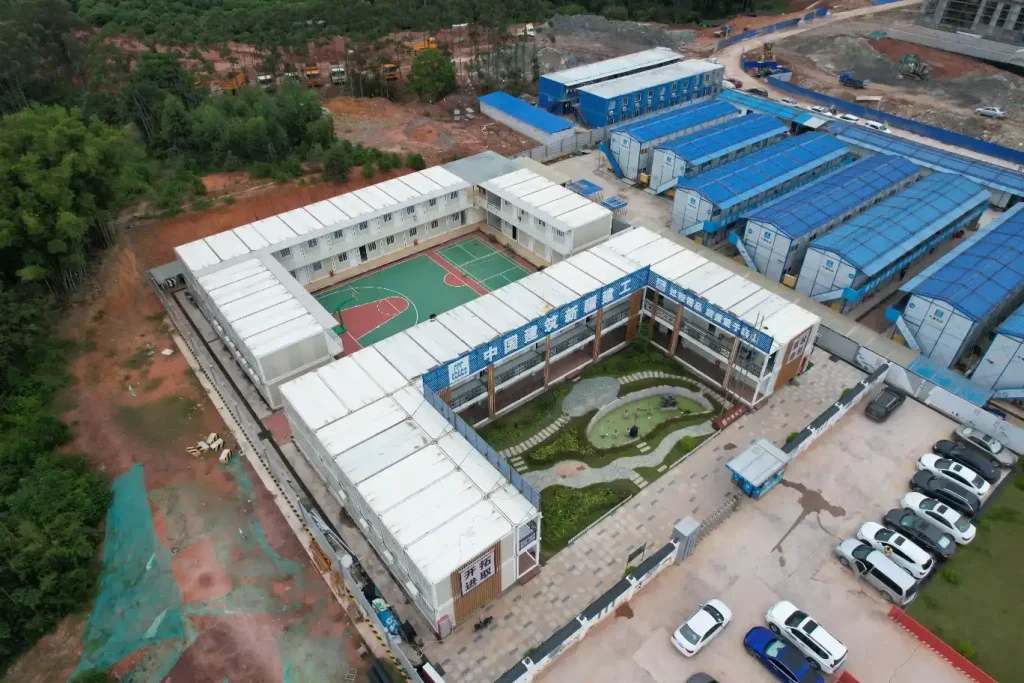
Once modules reach the location, installation moves fast. A camp with hundreds of units may take only a few days or weeks. GS Housing’s engineering teams have worked in many tight situations and know how to build quickly without losing control of quality. The company built 459 units for a Foshan emergency project in only seven days. A Winter Olympic project in Beijing reached completion in five days. The Xiong’an workers’ camp, with more than one thousand units, was finished in twenty days. These jobs show how much speed comes from careful planning and experience.
Standardized Module Design for Predictable Project Timelines
Because six factories follow the same procedures, all modules leave the production line with steady quality and shared standards. Project teams can prepare foundations, utilities, and transport knowing the modules will match the drawings exactly. Weather has less power to delay work. Labor shortages become smaller problems, since most tasks happen inside the factory. For oil fields, mining towns, LNG plants, and long pipeline corridors, this level of schedule control often becomes the biggest advantage.
Reduced Need for Heavy Equipment and Skilled Labor
Most of the technical work—wiring, plumbing, fitting panels—is finished before shipping. On site, teams mainly lift modules into place and fix them with bolts. This lowers the need for large teams of skilled workers, which is helpful in remote regions where special labor is expensive or rare. It also reduces the number of machines required on the ground, which cuts costs and lowers safety risks. Building becomes simpler and more predictable.
Why Are Container Houses More Sustainable for Long-Term or Repetitive Camp Use?
Many industries now look for greener ways to build. Remote projects are no exception. Container camps support this goal naturally because they use fewer materials and can be reused many times.
Reusable Modular Units with Low Material Waste
Each module can serve more than one project. When work ends in one area, the containers can move to the next without losing strength. This is especially helpful for oil and gas teams, mining companies, and pipeline contractors who move often. Controlled factory work also reduces waste, since parts are cut with more accuracy and fewer mistakes. The smaller environmental footprint can be an important factor for long-term projects and international clients.
Energy-Efficient Insulation and Safe Non-Combustible Materials
Good insulation matters in both very hot and very cold climates. GS Housing’s panel system keeps indoor temperatures more stable and lowers energy needs. The system uses non-combustible materials that meet strict safety rules, which is important for petrochemical and LNG sites. These factories often require higher standards because small mistakes can create large hazards. Uniform factory installation helps ensure the insulation works as planned every time.
Easy Relocation and Multiple Reuse Cycles
Traditional buildings cannot move. Container houses can. Full units can travel by truck, rail, or ship, sometimes even with furniture still inside. Camps can shift as the project moves, which saves both time and money. This ability to relocate makes container systems useful not only for industrial clients but also for NGOs, military groups, and emergency response teams who must adjust quickly to new situations.
How Can Container Houses Meet Diverse Functional Requirements of Remote Camps?
A camp is more than a place to sleep. People need spaces to work, eat, recover, and handle daily tasks. Container modules make it possible to design a full community in a short time.
Multi-Purpose Interior Layouts and Expandable Spaces
GS Housing modules come with integrated structure, insulation, electrical lines, plumbing, HVAC, and interior finishes. This allows builders to turn units into offices, medical rooms, canteens, laundry spaces, meeting halls, or command centers. As the project grows or shifts, new units can be added with little disruption. Camps remain organized and functional even as demands change.
Optional Add-Ons for Offices, Dormitories, Canteens, Clinics, and More
Because each module shares the same base structure, it is easy to add new buildings to the camp at any point. A project may begin with a small group of dormitories and offices. Later, it could expand to include clinics, prayer rooms, recreation spaces, or security sections. GS Housing has delivered such flexible setups for mining camps, pipeline routes, offshore housing, and many emergency missions in different countries.
Adaptability for Mining Camps, Construction Camps, Military Bases, or Emergency Settlements
Different industries need different layouts and safety levels. Mining areas often require strong buildings that handle dust and vibration. Oil and gas zones need high fire resistance. Military teams may need mobile hospitals or command rooms that assemble in hours. Humanitarian groups look for fast shelter that helps people quickly. Container systems allow these needs to be met without changing the core building method.
Why Choose GS Housing for Remote Camp Container House Solutions?
In a market full of suppliers, real ability shows in consistency, scale, and on-site performance. GS Housing meets all three needs with steady results.
Proven Flat-Pack Container System with High Strength and 20+ Years Lifespan
GS Housing’s system is built for long-term use. The steel frame offers strength, while the controlled production process ensures stable quality. These containers work well for both temporary and permanent roles, even in very tough locations.
Large-Scale Manufacturing Capacity from Six National Production Bases
The company runs major factories in Guangdong, Jiangsu, Sichuan, Tianjin, and Liaoning. Together, they produce up to 200,000 modular units each year. This scale allows GS Housing to support very large remote projects without losing quality or slowing down schedules. The shared standards across factories help guarantee that modules match plans from one region to another.
Complete Factory-Integrated Electrical, Plumbing, and Interior Finishes
Modules arrive nearly ready for use. Wiring, plumbing, waterproofing, flooring, and decoration are all completed before shipping. GS Housing follows strict TPM and 6S management systems to keep errors low and quality high. With most technical work done in advance, on-site crews can assemble the camp like a kit, making deployment much faster.
Call to Action
If your next project needs a camp that can be built fast, work well in harsh conditions, and grow with your team, GS Housing can help. Our modular container solutions offer strength, speed, and flexibility. Contact us to plan a camp that fits your site and timeline.
FAQ
Q1: How long does it take to install a full container camp?
A: A small camp may be ready in just a few days. Larger camps with hundreds of units often finish within one to three weeks once modules arrive.
Q2: Can container houses work well in extreme climates?
A: Yes. GS Housing modules are designed for strong winds, seismic zones, deserts, heavy rain, and cold regions. Insulation and materials can be adjusted for the local climate.
Q3: Can buildings be reused after a project ends?
A: Yes. Entire units can move to new sites and be used again many times. This makes them useful for mining, pipeline work, and emergency missions.



