

 English
  Arabic
  French
  German
  Italian
  Portuguese
  Russian
  Spanish
  Turkish
The Future of Education: Rapid and Affordable Modular Classrooms by GS Housing
The Future of Education: Rapid and Affordable Modular Classrooms by GS Housing
Schools all over the world keep running into the same tough problems. Student numbers can shoot up almost overnight, money is always tight, and there’s hardly any spare land on campus without messing up lessons that are already happening. Because of all this, more school leaders, districts, and even big international projects now choose modular buildings. They go up fast, cost less than people expect, and adjust easily to whatever a school really needs.
GS Housing, one of the strongest modular building makers in China, has noticed a huge jump in orders from both public and private schools lately. With six big factories and a rock-solid supply chain, the company now helps education projects in many different countries. Their flat-packed container classrooms come out of clean, controlled factories, travel safely, and get put together on site with almost no noise or chaos.
Here’s a closer look at why modular classrooms are quickly becoming the smart choice for schools that want to stay ready for tomorrow — and how GS Housing keeps raising the bar.
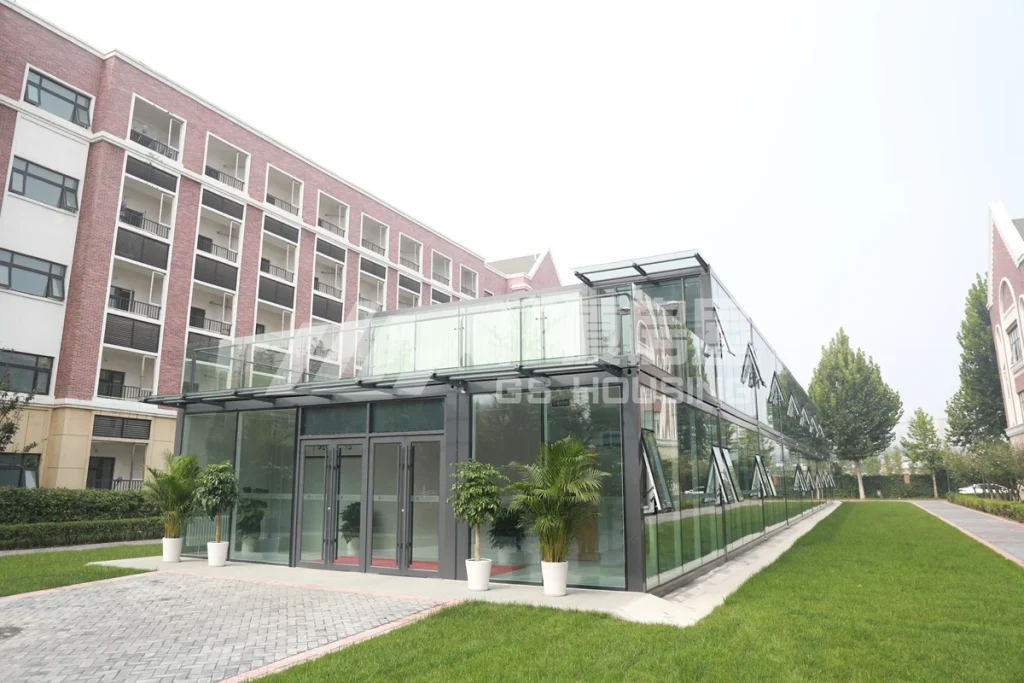
Why Do Schools Need Faster and More Flexible Classroom Solutions?
Growing Enrollment Pressures
In plenty of places, the number of kids in school keeps climbing fast because of bigger families, people moving to cities, or new government rules about education. Suddenly, a school can be short on rooms. Traditional building methods take months — sometimes even a couple of years. Modular classrooms, on the other hand, let schools respond in just weeks. That way, class sizes stay manageable and teachers can still do their best work even when numbers spike.
Rising Construction Costs
Money is another headache. Prices for cement, steel, and wood keep bouncing around, workers ask for higher pay, and long projects almost always go over budget. A single rainstorm or delay can add thousands to the bill.
Modular classrooms bring much more certainty. Everything is made inside a factory with set processes, so there’s far less waste and the timeline rarely changes. School leaders can finally plan their money without nasty surprises.
Need for Disruption-Free Campus Expansion
Schools never really shut down. Loud hammers, dust clouds, and big cranes right next to classrooms make learning harder and can even be unsafe for kids.
Modular buildings fix most of that. Around 80% of the work happens far away in the factory. When the modules finally arrive, the crew just lifts them into place, hooks up power and water, and finishes a few details. Students barely notice anything is happening.
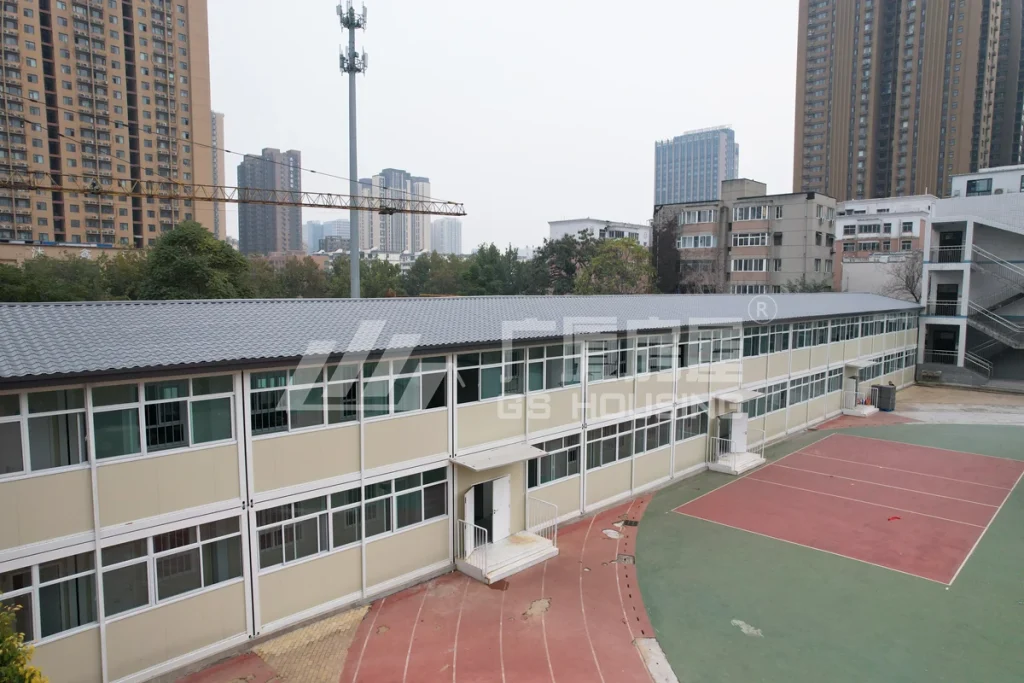
How Can Modular Classrooms Improve School Construction Speed?
The trick is simple but powerful: most of the heavy work moves off the school ground and into the factory. That one change cuts months off the calendar.
Factory-Based Production Efficiency
Inside GS Housing’s plants in Foshan, Tianjin, Shenyang, and other cities, machines and skilled teams work side by side without worrying about rain or cold weather. Roof frames, floor frames, columns, insulation, wiring, doors, and windows all go in before the unit ever leaves the building. Because everything follows the same proven steps every time, production stays smooth and steady.
On-Site Assembly Acceleration
When the truck pulls up to the school, the real magic starts. A small crew with a crane sets each box exactly where it belongs, connects a few pipes and cables, and the room is basically ready. Walls, ceilings, floors — everything already looks finished. Many schools open brand-new classrooms in less than a week after delivery.
Parallel Construction and Site Preparation
Normally, you have to wait for the foundation to cure before anyone can start building walls. With modular, the school can pour the simple foundation while the factory builds the rooms at the same time. Those two jobs run together instead of one after the other, so the whole project finishes much sooner — perfect for schools that need space before the next term starts.
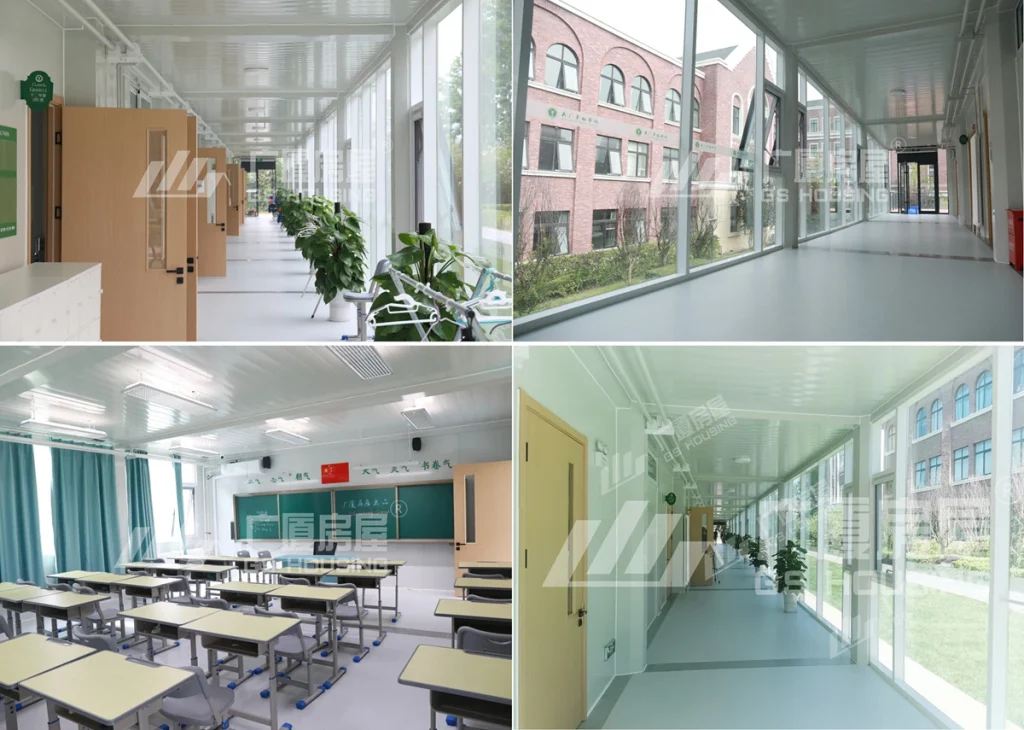
What Makes Modular School Buildings More Cost-Effective?
Speed is great, but saving money matters just as much. Modular construction saves in several smart ways.
Controlled Material Use and Reduced Waste
In the factory, computers measure and cut steel and panels with millimeter precision. Scrap gets recycled right away. GS Housing uses modern CNC machines and careful planning, so almost nothing goes in the trash. Those little savings add up to lower prices for the school.
Lower Labor and Logistics Costs
Building on site is expensive because you need dozens of workers for months. With modular, most of that labor happens in the factory where teams are steady and tools are close at hand. On campus, only a handful of installers are needed for a few days. Shipping is cheaper too — flat-packed units stack neatly, so one truck or container ship can carry many classrooms at once.
Predictable Budget Planning
Because weather and shortages almost never cause delays, the final price rarely changes. School boards and government offices love that kind of certainty when they write their yearly budgets.
How Do Modular Classrooms Support Safe and Comfortable Learning?
Quick and cheap would mean nothing if the rooms felt cheap or unsafe. Luckily, today’s modular classrooms easily match — and often beat — traditional ones.
Good learning happens when kids stay comfortable and focused. That needs steady temperature, quiet surroundings, and clean air.
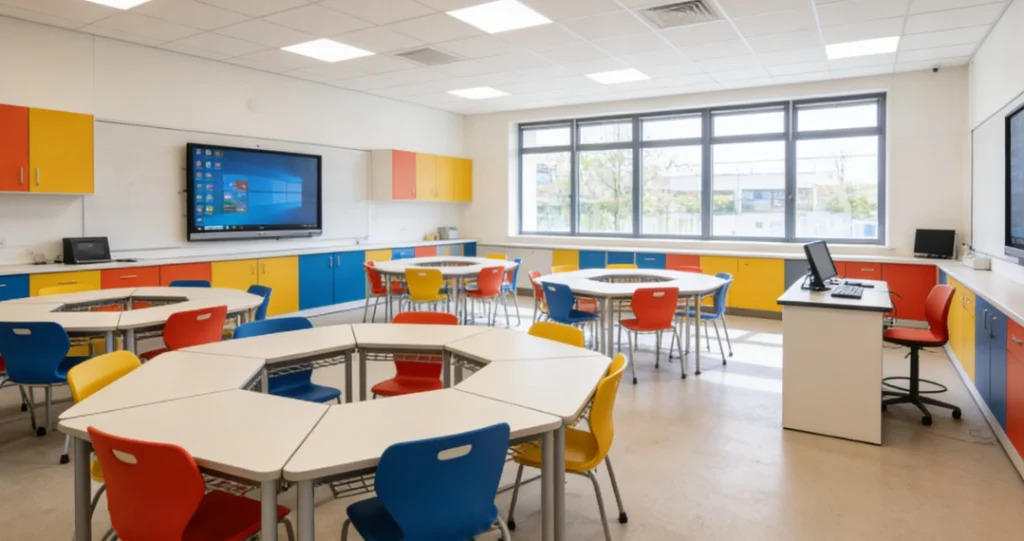
Thermal and Acoustic Performance
GS Housing fits thick insulation, double-glazed windows, and tight seals into every wall. Outside noise drops way down, summer heat stays out, and winter warmth stays in. Students can actually hear the teacher without shouting over traffic or air-conditioner noise.
Fire-Resistant and Durable Materials
The main structure is tough steel, and the insulation is A-grade non-combustible material. These buildings stand up to fierce storms, heavy rain, and even earthquakes up to magnitude 8 or typhoons up to level 12. Parents and staff sleep better knowing the rooms are genuinely solid.
Healthy Indoor Environment
Factory building keeps dust and moisture away during construction, so there’s almost no risk of mold later. Fresh materials and proper ventilation mean cleaner air for everyone inside.
Why Are GS Housing Modular Houses Ideal for Modern Education Spaces?
Lots of companies make modular buildings, but GS Housing pays extra attention to what schools actually need day-to-day.
Flexible Layouts for Classrooms, Labs, and Offices
Each unit works alone as a single classroom or joins others to make science labs, art rooms, libraries, or quiet teacher offices. If the school later wants bigger spaces or different rooms, rearranging is straightforward.
Expandable Multi-Unit Configurations
Stack them up to three stories high or connect them side by side — schools can grow an entire new wing, cafeteria, or dorm whenever enrollment climbs again. Adding more modules years later is simple and cheap.
Proven Quality from Automated Manufacturing
Six large, modern factories run with automated welding robots, precise CNC cutting, and tough graphene powder coatings. Every single unit goes through the same strict checks, so schools know exactly what kind of quality they’ll get — and it lasts for decades.
Start the future of education with GS Housing modular classrooms
Modular classrooms are no longer just an emergency fix; they’re becoming the main way smart schools grow. They arrive fast, cost less than most people think, stay quiet during installation, and adapt as needs change. GS Housing combines serious factory power with real understanding of school life, delivering flat-packed container classrooms that look good, work great, and stand the test of time.
For any education project that needs speed, strength, and flexibility without breaking the bank, GS Housing has already proven itself as the go-to partner.
FAQ
Q1: How long does it take to install a GS Housing modular classroom?
A: Most single classrooms are ready in just a few days after the modules arrive. Larger teaching blocks usually take two to four weeks depending on size.
Q2: Can modular classrooms be relocated later?
A: Yes — they’re built to be moved. Schools can shift them to another corner of campus or even transport them to a completely different location with minimal work.
Q3: Are modular school buildings safe for long-term use?
A: Definitely. The steel frames, fire-proof materials, and careful factory process give every building a service life of more than 20 years, even in tough weather or earthquake zones.



