Turkish
  English
  Arabic
  French
  German
  Italian
  Portuguese
  Russian
  Spanish
Endüstri haberleri
How Prefabricated Camps Slash Project Costs for Large Scale Deployments
Container House Applications: Practical Uses for Labor Camps, Offices, and Temporary Accommodation
Container House Applications: Practical Uses for Labor Camps, Offices, and Temporary Accommodation
2026-01-26 11:04:00
Introduction: It Always Starts with the Same Question
Container house applications are rarely discussed in theory.
They usually come up when a project is already under pressure—tight schedules, remote locations, or no local accommodation available.
This article looks at where container houses actually work on real projects, including labor camps, site offices, temporary staff accommodation, and public facilities.
Rather than marketing claims, it focuses on practical use cases that project owners, EPC contractors, and overseas project teams regularly face.
Container Houses for Labor Camps
If you’ve ever walked through a half-finished site at 6:30 a.m., you know the scene.
Workers lining up for breakfast.
Someone looking for the toilet.
Someone already in muddy boots.
A container house for labor camp is not about comfort.
It’s about order.
Beds that don’t wobble.
Toilets that flush.
Showers that drain.
Power that doesn’t trip every time someone plugs in a kettle.
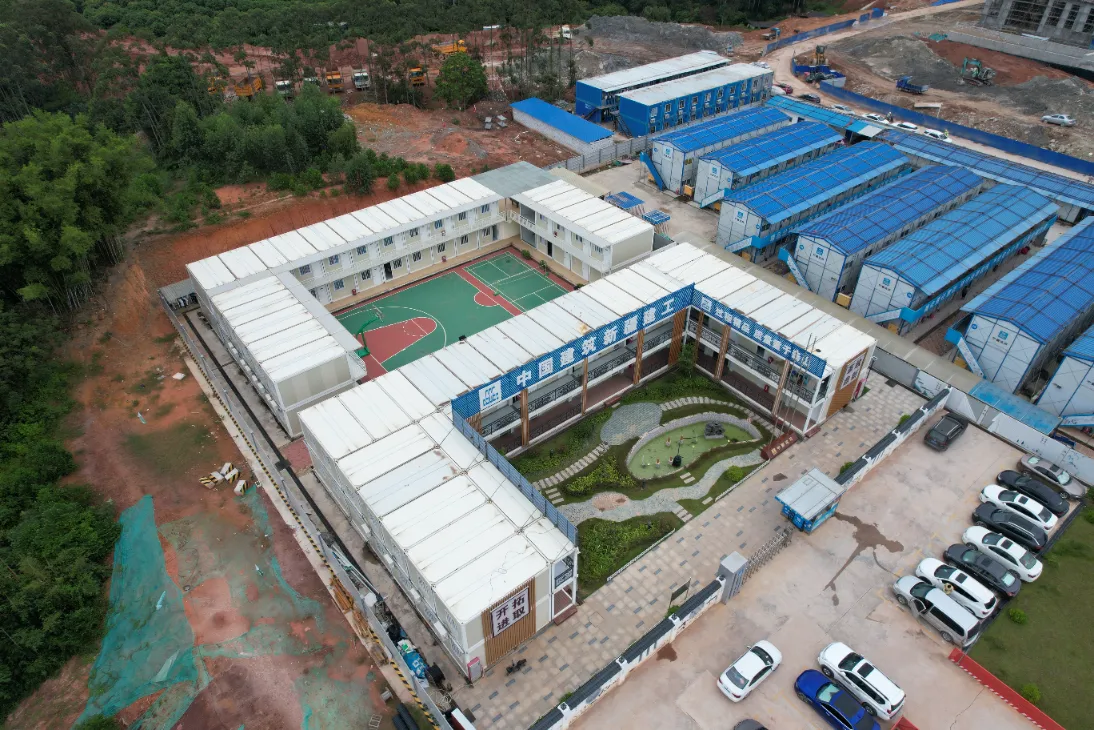
This is usually the stage where project teams want to review real camp layouts and talk through capacity, utilities, and site constraints.
On remote sites—especially remote mining site modular camps or desert infrastructure projects—building with bricks just doesn’t make sense. Too slow. Too many variables. Too much waste.
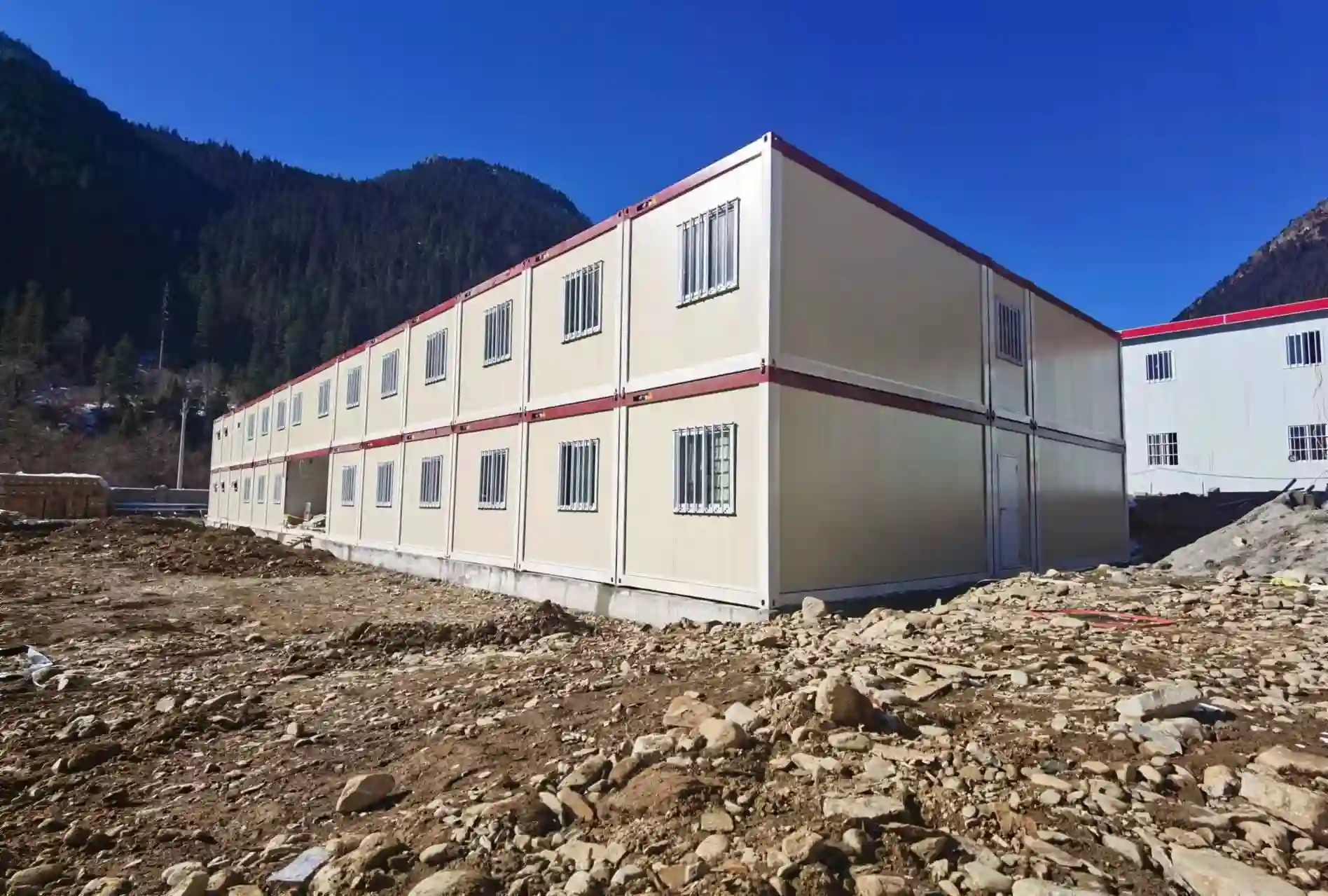
Factory-built units arrive with walls, insulation, wiring, and plumbing already done. Cranes lift them. Teams bolt them. By evening, people move in.
That’s why more EPC contractors and overseas project teams now plan labor camps as modular from day one. It removes one major unknown from the schedule.
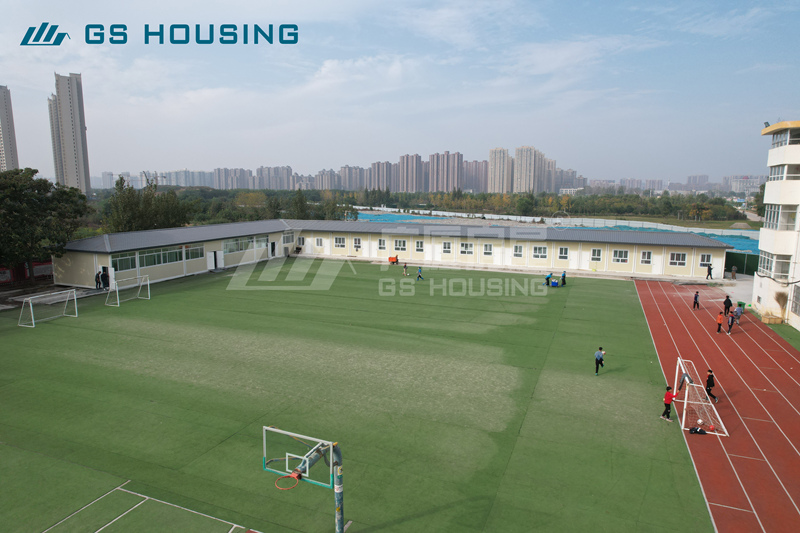
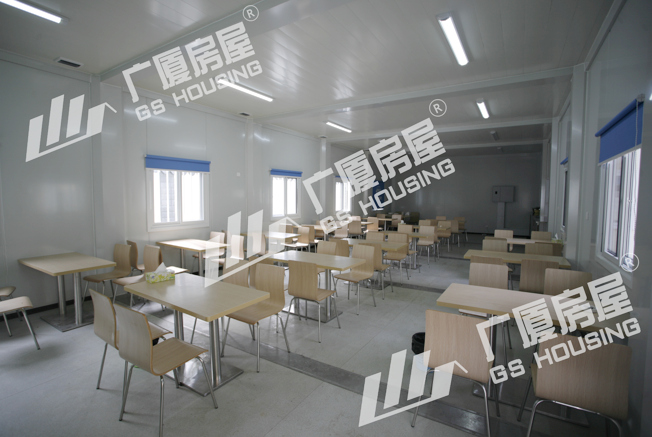
If you look at how GS Housing structures their camp layouts
you’ll notice they’re simple and logical. Dormitories close to wash areas. Canteen separated. Clear walkways. Practical, repeatable planning.
Container Houses for Offices and Site Facilities
Site offices are funny.
Everyone wants them fast.
No one wants to spend money on them.
A container house office solves that problem quietly.
You don’t need to build walls.
You don’t need to chase cables.
You don’t need to wait for ceilings.
The unit arrives.
Power connects.
Lights turn on.
That’s it.
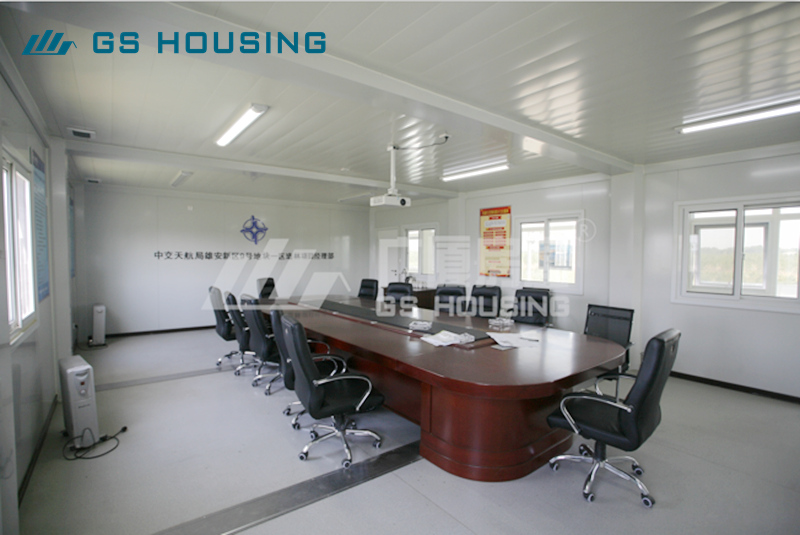
On many construction sites and industrial projects, offices, meeting rooms, and even control rooms are all container-based. When the project moves, the office moves. No demolition. No debris. No arguments with the landlord.
This is especially common on large infrastructure jobs and coastal construction worker quarters, where permanent buildings are restricted.
If you browse the project cases burada
you’ll see how often offices are part of the same modular system as accommodation.
Container Houses for Temporary Accommodation
This is where things get personal.
Because accommodation isn’t just “space.”
It’s where people sleep.
It’s where they call home for months.
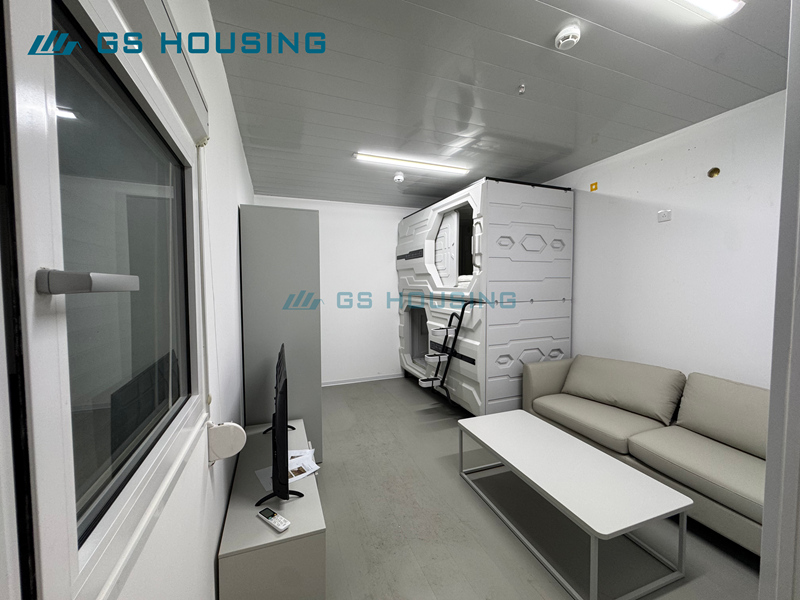
Container house accommodation works because it’s predictable.
Same room size.
Same layout.
Same bathroom.
No surprises.
For overseas engineers, supervisors, and technical staff, this matters. After a 10-hour day, nobody wants to fight with broken plumbing or flickering lights.
In industrial parks and overseas project bases, container rooms are often arranged like small neighborhoods. Walkways. Lighting. Sometimes even plants.
It’s not luxury.
But it’s stable.
And stability matters more than people admit.
If you’re curious how these rooms are built before they ever reach site, the container house manufacturing process explains the factory side in detail—and why these units feel “finished” on day one.
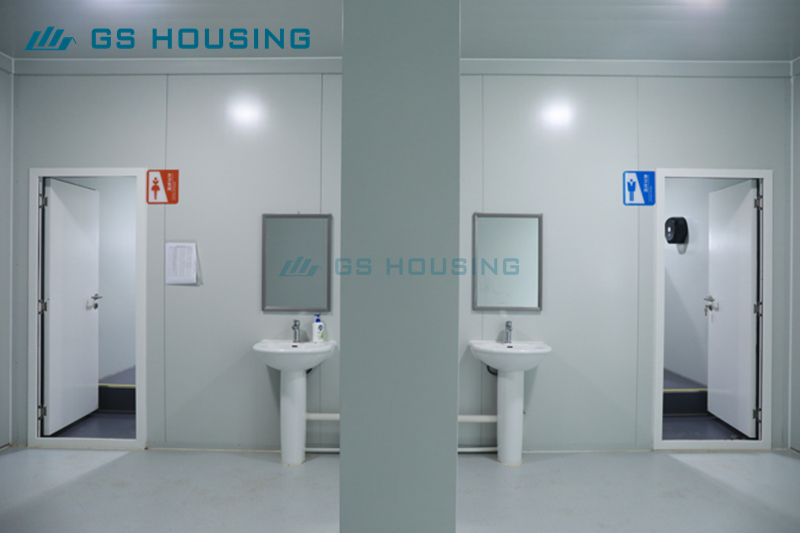
Container Houses for Schools and Hospital
This is the part that surprises people.
But in remote areas, post-disaster zones, and fast-growing regions, container houses for schools and hospital are often the only realistic option.
You can’t wait a year to build a school.
You can’t run a hospital under a tent.
So modular classrooms, testing rooms, and treatment spaces are built in factories, shipped, and installed in days. Windows, doors, wiring, insulation—done before arrival.
From an engineering point of view, these units focus on:
- Işık
- Ventilation
- Easy cleaning
- Safe electrical layout
Not design awards.
Just function.
And in many cases, that’s enough to change lives.
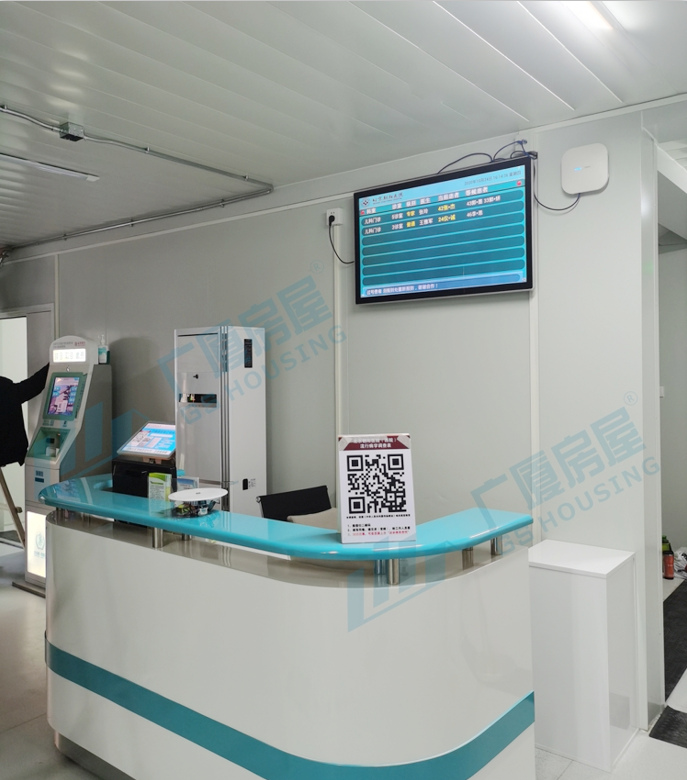
Customization Options for Different Applications
Here’s the part most brochures don’t explain.
A labor camp unit is not the same as a school unit.
A desert site is not the same as a coastal site.
A mine is not the same as an industrial park.
That’s why modular housing solutions work. They’re adjustable.
You can change:
- Insulation thickness
- Wall panel type
- Window size
- Door position
- Internal layout
- Electrical standards
Hot climate? Focus on ventilation and insulation.
Cold region? Focus on thermal performance.
Humid zone? Focus on sealing and drainage.
The key is that these decisions happen in the factory, not on site.
That’s the difference between something that’s modular—and something that’s merely temporary.
In practice, many teams prefer to confirm these decisions directly with the manufacturer, based on climate, local codes, and logistics
If you look through GS Housing’s container house products
you’ll see how these variations are handled without complicating installation.
Conclusion: It’s Not About the Box. It’s About the Situation.
Container houses are not chosen because they are modular.
They are chosen because they solve real problems under real project constraints.
For labor camps, site offices, and temporary accommodation on overseas or remote projects, the question is rarely about appearance.
It is about whether the solution can arrive on time, install quickly, and perform predictably.
That is why many project teams discuss container house options early—not to buy immediately, but to understand what will actually work on their site.